
National Pavilion of Uzbekistan
19th International Architeture Exhibition 2025
La Biennale di Venezia
Commissioner: Gayane Umerova, Art and Culture Development
Foundation of Uzbekistan
A Matter of Radiance
Curator: GRACE (Ekaterina Golovatyuk, Giacomo Cantoni)
Exhibition Design: GRACE
Preview: May 8 – 9, 2025
On View: May 10 – November 23, 2025
Location: Quarta Tesa (Arsenale)
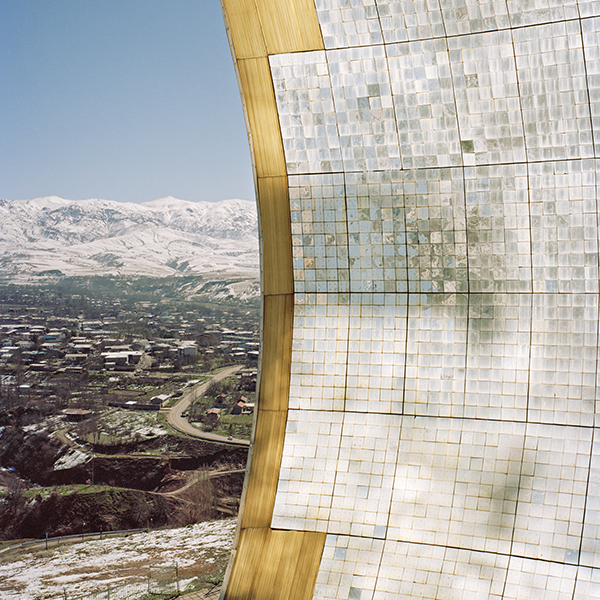
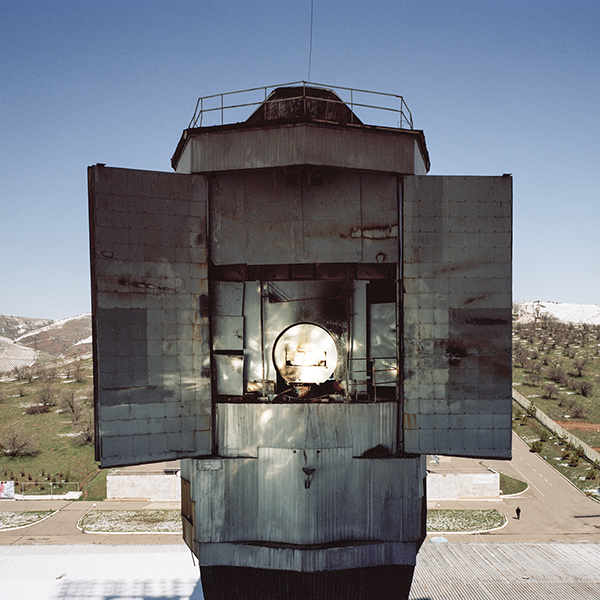
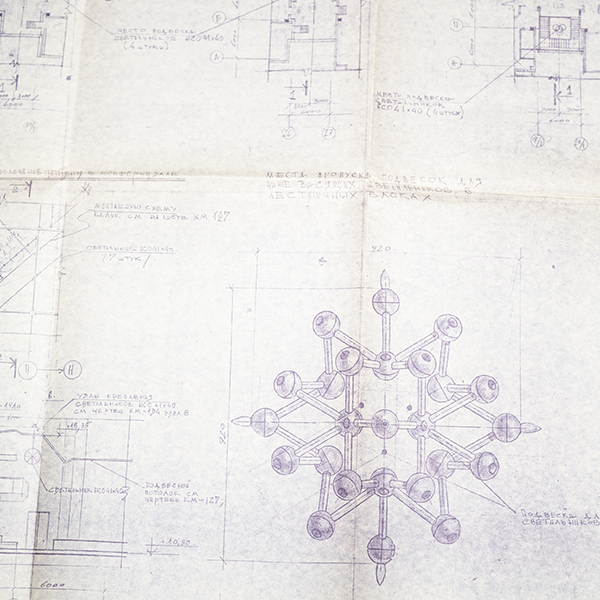
In past years, Uzbekistan has been represented at the Venice Biennale as a country moving forward thanks to the traditions of its millennial culture. This was aligned with the recent themes of the Biennale, which aimed to showcase the cultural diversity of non-Western countries. In the twentieth century, Uzbekistan became a part of the various modernities of the world. The goal of the UNP 2025 is to emphasize the scientific and cultural relevance of the recent modernist legacy and its potential beyond the scope of a single country. In a word, the pavilion will explore the past, present, and future of a modernist infrastructure that “landed” in Uzbekistan.
Built between 1981 and 1987, the Sun Institute of Material Science (originally, Sun Heliocomplex) was, at the time, one of only two structures worldwide equipped with a large solar furnace to study material behaviors at extreme temperatures, initially conceived for space and military research. The furnace consists of four main components. Sixty-two heliostats on a terraced field facing south direct the sun rays toward an energy concentrator with nearly 11,000 mirrors, which then redirects these rays on to the focal point of the furnace, which is 40 cm in diameter. This allows the furnace to reach temperatures close to 3,000 degrees Celsius (half of the sun’s temperature) extremely fast, excluding any material impurities. An administration and laboratories building, where the scientists work and conduct research, completes the facilities. A typical case of the Cold War competition, the Institute was conceived after an analogous facility was built by NATO in Odeillo, France, in 1969. After a long search within the Soviet republics, the site near Tashkent, Uzbekistan’s capital, was chosen due to the perseverance of the local scientists, led by Sadyk Azimov, and to the favorable climatic and geological conditions. Named a “swan song” of the Soviet Union, the furnace was the last major Soviet scientific project before the dissolution of USSR. In the early period of the furnace’s operation, the heat-resistant coating of the Soviet space shuttle Buran was tested here. After 1991 the site functioned at reduced capacity.
The change of directorship last year led to an revival of interest in and funding for the Institute with the ambition to transform it into “a valley of green technologies” by 2030 and to achieve a leading position in this field within Central Asia. The complex came into focus as part of the research for the project Tashkent Modernism XX/XXI, which since 2021 has been developing a roadmap for the preservation and adaptation of Tashkent’s modernist architecture.
The results of the research are multiple and encompass protection instruments, such as building passports — the basic tool within Uzbekistan legislation on heritage preservation—and communication instruments, such as exhibitions, books, and conferences. As well as the impressive scientific infrastructure, the statement of significance for the Sun Helicomplex addresses its cultural significance, since the complex contains unique examples of monumental art, including glass sculptures by Lithuanian artist Irena Lipene.
The pavilion focuses on the present and future of the Institute, conceptually rethinks it beyond the preservation impulse and contextualizes it within a variety of scientific, social, and cultural agendas.
Having studied the global situation of solar plants and furnaces, it is clear that for the latest research in the field of energy production, green hydrogen energy or synthesis of new materials, the large solar furnace has a series of inherent redundancies related to its scale that currently inhibit it from being truly cutting-edge research infrastructure. Other, smaller furnaces, built by the scientists, are used on a daily basis.
Once a utopian promise of a bright future, the complex now exists within a rather dystopian reality in which the promised future is systematically postponed. Its spectacular placement on a solid mountain rock, the grandiose curve of the concentrator, and the monumental art inside the public spaces are accompanied by rust accumulations on structural elements, roughly welded Soviet details, and superficial repairs of the last 20 years.
Conceived at the gigantic scale of many Soviet infrastructure projects within the rationale of bipolar division of the world (the Cold War), the large concentrator appears too big for any existing reality. Technically and economically complex, today the furnace occupies the strange position of being neither particularly functional nor obsolete. At once sustainable and unsustainable, modernist and archaic, didactic and secret, celebratory and utilitar ian. Suspended in time and space, this architecture is bound to emanate the transnational logic of its conception over the deserted landscape.
Yet, rather than declaring the furnace’s redundancy as a flaw, the pavilion explores the potential of this cognitive crack, its meanings and relevance for science and beyond, asking what urgent questions of contemponeity it could answer now.
Curators
GRACE is an international studio of architecture, urbanism, and research, based in Milan. It was founded by Ekaterina Golovatyuk and Giacomo Cantoni. Golovatyuk and Cantoni's past work experience includes a long-term collaboration with OMA/AMO, focusing on cultural and research projects in Europe and Hong Kong. Preservation is a central theme of the studio's work, with particular focus on 20th-century heritage.
As well as several individual projects in Central Asia, GRACE's current collaboration with the Uzbekistan Art and Culture Development Foundation, Politecnico di Milano, and a group of local and international researchers to revise the legal framework and develop strategies to preserve 21 modernist buildings in Tashkent has led to the forming of a particular expertise and the establishment of a critical position on the subject, beyond the current ideological and market-driven paradigm.
Artists
A series of fragments inside the pavilion at the Arsenale unveil key components of the institute and interpretative themes, through which the exhibition is built. These fragments are either brought from Uzbekistan and slightly adapted or built elsewhere and conceived for the institute’s use after the exhibition. All modifications imply conceptual and operational rethinking of these elements and aim to reveal their latent meanings and functionality.
The pavilion will also feature contributions by writer Suhbat Aflatuni, artists Azamat Abbasov, Ester Sheinfeld and Mukhiddin Riskiyev alongside a dialogue with scientists Odilkhuzha Parpiev and Sultan Suleymanov, further illuminating the exploration of this multifaceted modernist legacy. The exhibition will also serve as the stage design for a theatrical performance.
ACDF
The Art and Culture Development Foundation of the Republic of Uzbekistan fosters international cooperation and promotes the culture of Uzbekistan on the international arena. The Foundation spreads the national heritage through developing and supporting initiatives in the areas of fine arts and architecture, literature, theatre, music, and dance.
Our mission is to create an inclusive and accessible environment in the country's cultural institutions, contribute to renovation of museums, and to develop cultural patronage and professional training for the arts and culture sector.
18th International Architecture Exhibition – La Biennale di Venezia May 20 – November 26, 2023
Unbuild Together: Archaism vs. Modernity

Curated by Studio KO
Our response to the theme of the 18th International Architecture Exhibition of La Biennale di Venezia, The Laboratory of the Future, can be read as an encounter of different horizons, allowing us to take a cross look at the Uzbek architectural heritage, to delve into its past in order to find the necessary tools for the elaboration of tomorrow’s world. Unbuild together the modernity, by questioning the notion of archaism.
Participation is above all collaborative, placing the human being at the center of our approach. Through the exchanges between us and architectural students of Ajou University in Tashkent, craftsmen and associated artists, a collective proposal will emerge, leaving a place for the unexpected.
The associated artists all have a poetic role accompanying our approach. A film in the core of the architectural installation by El Mehdi Azzam, diffusing its significance and emotion. A reduced model made by Miza Mucciarelli, as a mental comprehension of the lived experience. A photographic work by Emine Gözde Sevim, a sensitive eye of a shared experience.
It is about giving ourselves theoretical and practical tools to achieve this. From the ruins of the ancient qalas to the multiple possibilities that earth offers to build, especially the brick. From the mythical figure of the labyrinth to the constructed reality. As many elements to be reinterpreted in order to create a sensitive and poetic architectural proposal, reflecting a truly contemporary and contextual practice.

The curators
Studio KO
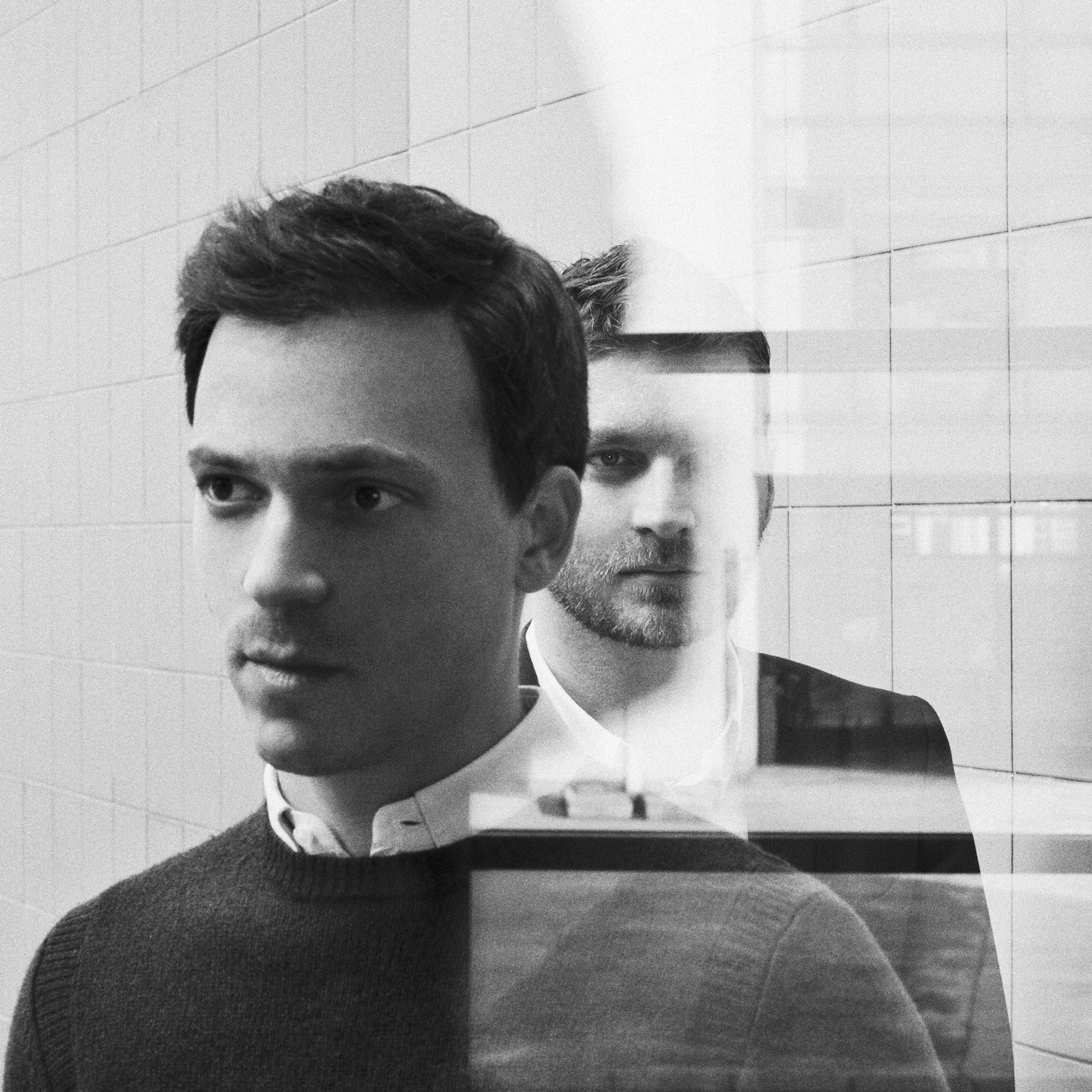
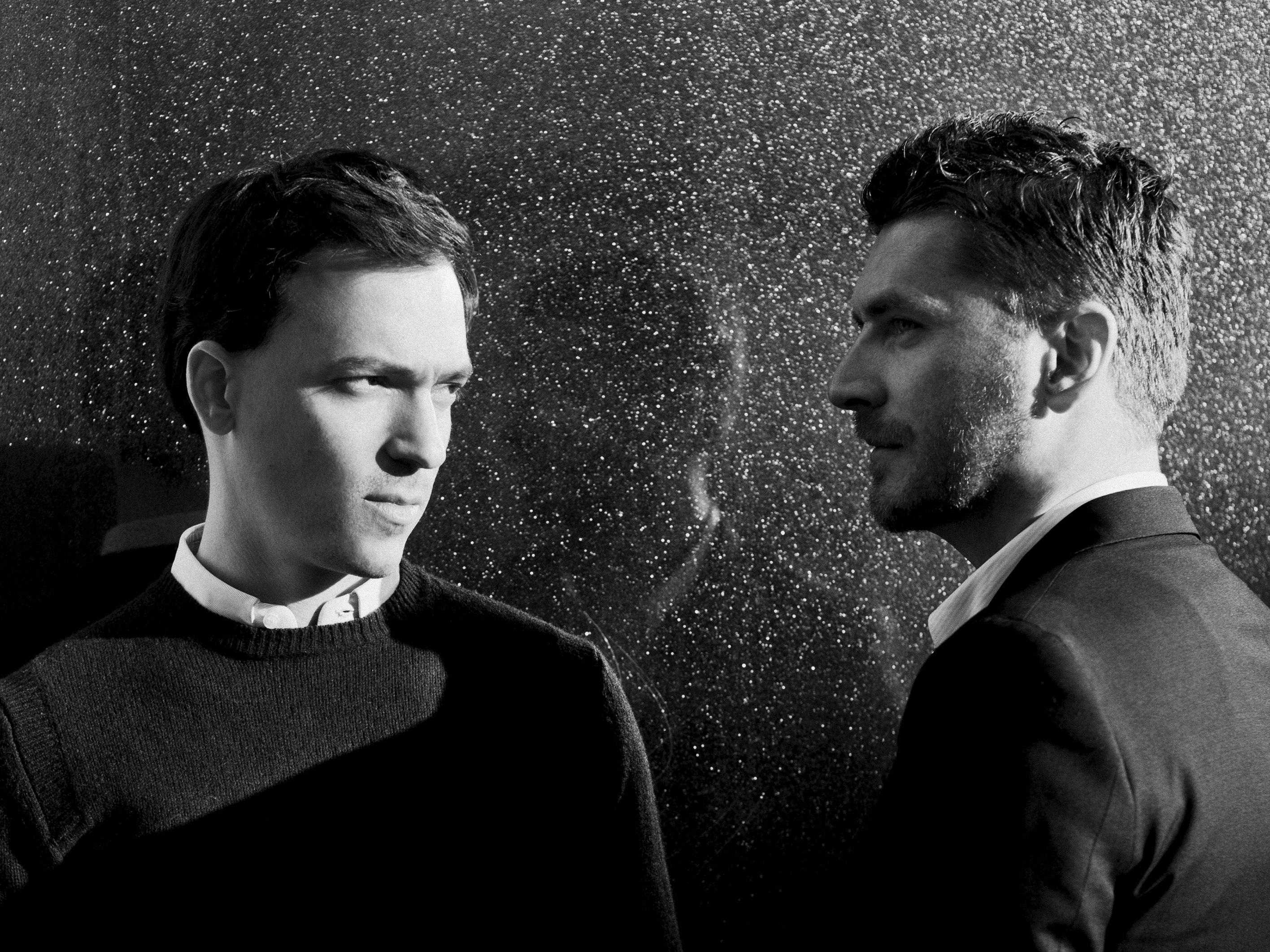
Since meeting at the Beaux-Arts school of Architecture in Paris and the subsequent creation of their studio in 2000, Karl Fournier and Olivier Marty have applied their elementary assertion to every scale of their projects.
Based in Paris and Marrakech, Studio KO creates contemporary public and residential architecture all over the world, inspired by the intelligence of places.
Not confined to a grammar of styles or any systematic methods, the studio is defined by an attitude. An esteem for nature and existing cultures, the audacity of the broad aesthetic differences, an attention to craftsmanship and local skills, a permanent search for the rugged. For an architecture of oxymoron. Radical and archaic. An architecture with a sensibility that, from the foundations to the signature scent, reveals, without arrogance, its uniqueness and mystery.
Intuitions
Studio KO, Karl Fournier & Olivier Marty Architects, founders of Studio KO
The only thing that can balance the weight of reality is the power of imagination. Necessary intention. Freedom that can be vertiginous but that is nevertheless the driving force behind creation.
It requires maintaining a safe distance from theories, knowing them in order to better circumvent them, understanding them without becoming their slave. It also means being wary of trends and the pleasant fragrance of the zeitgeist, which anaesthetizes critical thinking through the lightning speed of its propagation. It implies abandoning any attempt at style, which is simply a way of bringing the focus back onto oneself. It is about leaving the shores of certainty and flirting with doubt, in order to better embrace one’s sensitive context.
Why context?
It would be so much simpler to ignore it, but we must refuse the easy way out. Because context is about what has happened in the past, and what remains of it. For what context teaches us when we are prepared to look, listen , and scrutinize it. For its complex ramifications that nourish a project. Archaeology, geology, poetry of the landscape. For what it says about man and the struggle that has played out between nature and mankind, who takes whatever nature has to offer that is essential for survival. It is about domestication, traces, and respect.
Because we have faith in rural common sense, in the everyday necessities that forged built landscapes before the industrial revolutions. Not out of an excessive taste for the past, but because there is so much to learn from the way in which several houses fit together to protect themselves from a prevailing wind, in how shade was created and sunlight allowed to enter. In the way each material was used for what it had to offer in its raw state: its resistance to rain, its density, its capacity to bridge a void, or to be compressed.
A time in which scale and spatial proportion were but precise expressions of man’s needs. A frugality that questions the monumentality of modern-day constructions.
The underlying notion of a perfect and just balance, which can only be achieved by understanding the context, is fundamental. Because architecture is always intended to fill a need, it should be as balanced and apt as possible.
Justness is an indispensable prerequisite to the emergence of beauty, which, needless to say, is not a dirty word. Beauty has the unique ability to reach out across eras, far beyond the simple moment of its creation. Beauty alone escapes the grip of time, and can turn back to gaze at it. Not beauty for beauty’s sake, but for its enduring force of resistance to the uniformity of the world.
Look at the countrysides of Europe, the planted terraces of the Atlas Mountains, the steppes of Karakalpakstan: at all the small things, so often insignificant yet beautiful, that possess the power of the obvious, of the harsh conditions that prompted their invention. It is by their abstraction, their simplicity, and their ability to withstand the test of time that they are relevant today. And it is this relevance that we call modernity.
Make no mistake, this is not about nostalgia, pastiche, or folklore. We have no other intention than to belong to our time; if we are infatuated with modernity, it is of a rooted modernity. Archaic.
The associated artists
Abdulvahid Bukhoriy
Artist, Ceramics Master
In 1977, Abdulvahid Bukhoriy was born in Bukhara. As a young student, he learned his first lessons in ceramics from the renowned folk ceramics craftsman Babayev from Uba village in Vabkent Region and Master A. I. Narzullayev of the Gizhduvan School of Ceramics. The renowned ceramics master Fazil Mirzayev taught him the fundamentals of both modern and traditional Uzbek ceramics, and he later graduated from the ceramics faculty of the School of Arts named after P. P. Benkov. Abdulvakhid was able to choose his career thanks to his familiarity with the ceramic creations of well-known artists and the curriculum of local Uzbek schools. Since then, he has started to consider what will happen to and how to bring back the Blue Ceramics of Bukhara, which have been forgotten for more than a century and have ceased to exist.
El Mehdi Azzam
Author, filmmaker
After studying engineering and physical sciences, El Mehdi Azzam turned to cinema which he studied first in Morocco then in France. As a director, his films have been awarded in several festivals (Grand Prix in San Sebastian, Prix Jeune Public in Cinémed, Prix SACD, Prix Canal+…). He has collaborated with Studio KO on three creative films: Almost KO, ‘E’, Tentative désespérée pour définir la patrie. Currently, he is preparing a PhD at the Jean Jaurès University in Toulouse, around the aesthetic impact of Artificial Intelligence on cinematographic language.
Miza Mucciarelli
Architect, sculptor and model maker
Born in Brescia, Miza Mucciarelli graduated from the Polytechnic School of Milan in 2001. The same year, she moved to Paris to manage the model laboratory at Dominique Perrault Architecture. She worked on the restoration of the archives and creation of new models, then set up the Perrault retrospective at the Centre Pompidou. In 2009, she founded her own studio, Atelier Misto, dedicated to architectural models that ally craftsmanship to the choice of precious materials : marbles, onyx and other rare stones, resins mixed with special woods, glass and metals. Constantly experimenting, researching and combining new techniques and materials to achieve her personal aesthetic, Miza conceives her models as sculptures reflecting the essence of spaces and associated sensitive experiences. She lectured both at the Ecole Nationale Supérieure des Arts Décoratif (ENSAD) and FEMIS film school in Paris until 2015.
Emine Gözde Sevim
Photographer
Born in Istanbul, Emine Gözde Sevim is an artist acclaimed for her narratives about lives amidst historic shifts. Her work focuses on individuals’ experiences in globally newsworthy moments in an attempt to create “alternative” visual narratives of history. She graduated from Bard College in 2008. Her works to date have been exhibited, published and recognized by awards and grants internationally. She is the author of “Embed in Egypt” (Kehrer Verlag, 2015) and is the first, and to date the only grantee of Turkish origin of the coveted Magnum Foundation Fund. She lives in Brooklyn, New York.
The research partners
Ajou University in Tashkent (AUT) was established in 2020 in cooperation with Ajou University (Republic of Korea). Ajou University graduates make splendid careers at organizations whose activities relate to Engineering, IT, Medical Sciences, Business, and International Studies.
Ajou University is widely recognized for its innovative international programs and strong support for international students and has collaborative partnerships with over 322 universities in 65 countries.
The two workshops
The Unbuild Together: Archaism vs. Modernity workshops in Uzbekistan focused on exploring the tension between archaism and modernity in architecture. Led by Studio KO, the workshops provided architecture students of the Ajou University in Tashkent with opportunities to study traditional brick architecture and ancient qalas ruins, and to use materiality as a means of ideation.
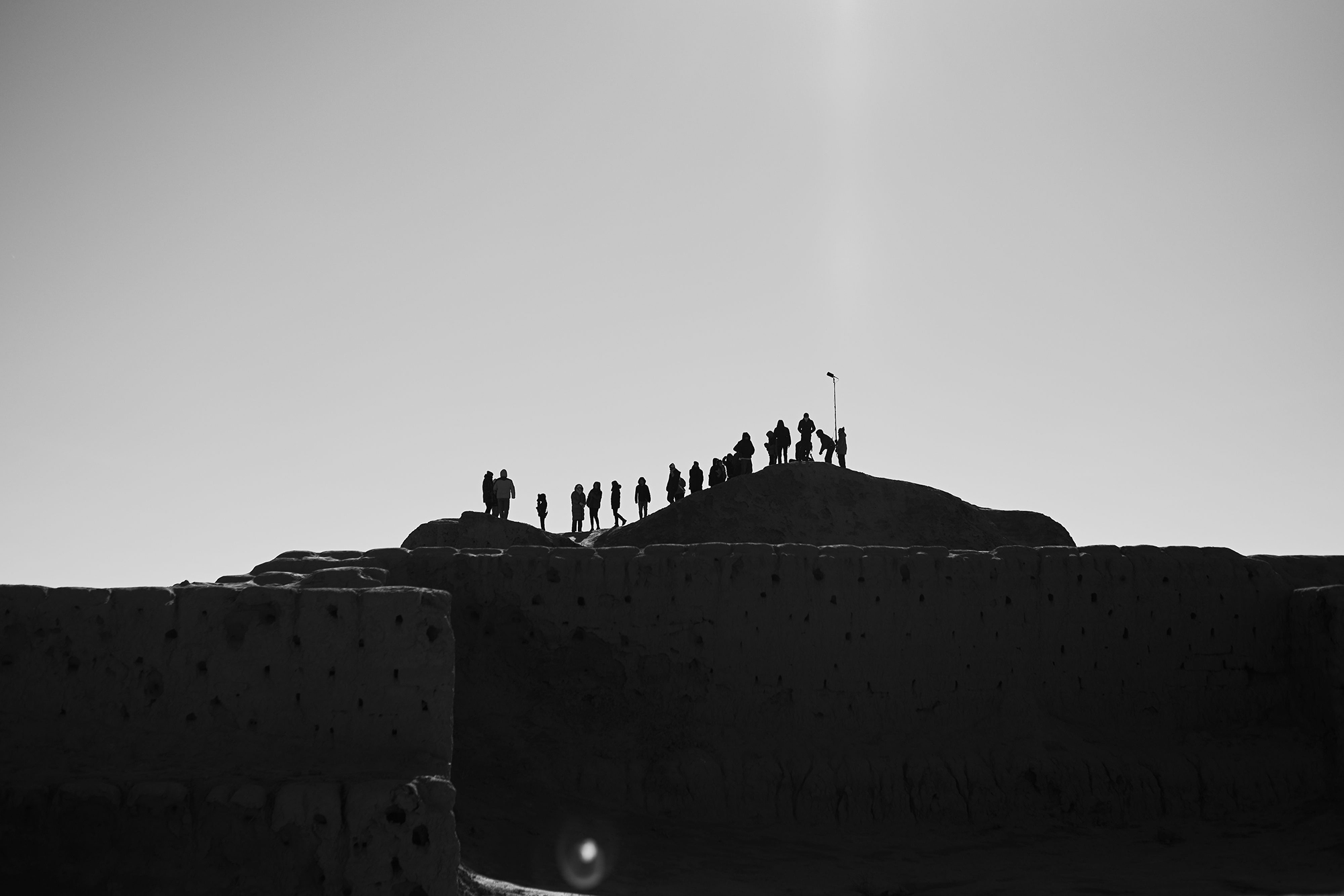
1) The first workshop, Archaism vs Modernity, centered on the spatiality of architecture and the cultural heritage of ancient qalas in Karakalpakstan. The students embarked on a field trip to witness the ruins firsthand, considering them both as a testimony of the past and as the future of modernity. The theme of contextuality was explored, as the students delved into Jean Nouvel's Louisiana Manifesto and discussed the potential and limits of contextualism in architecture.
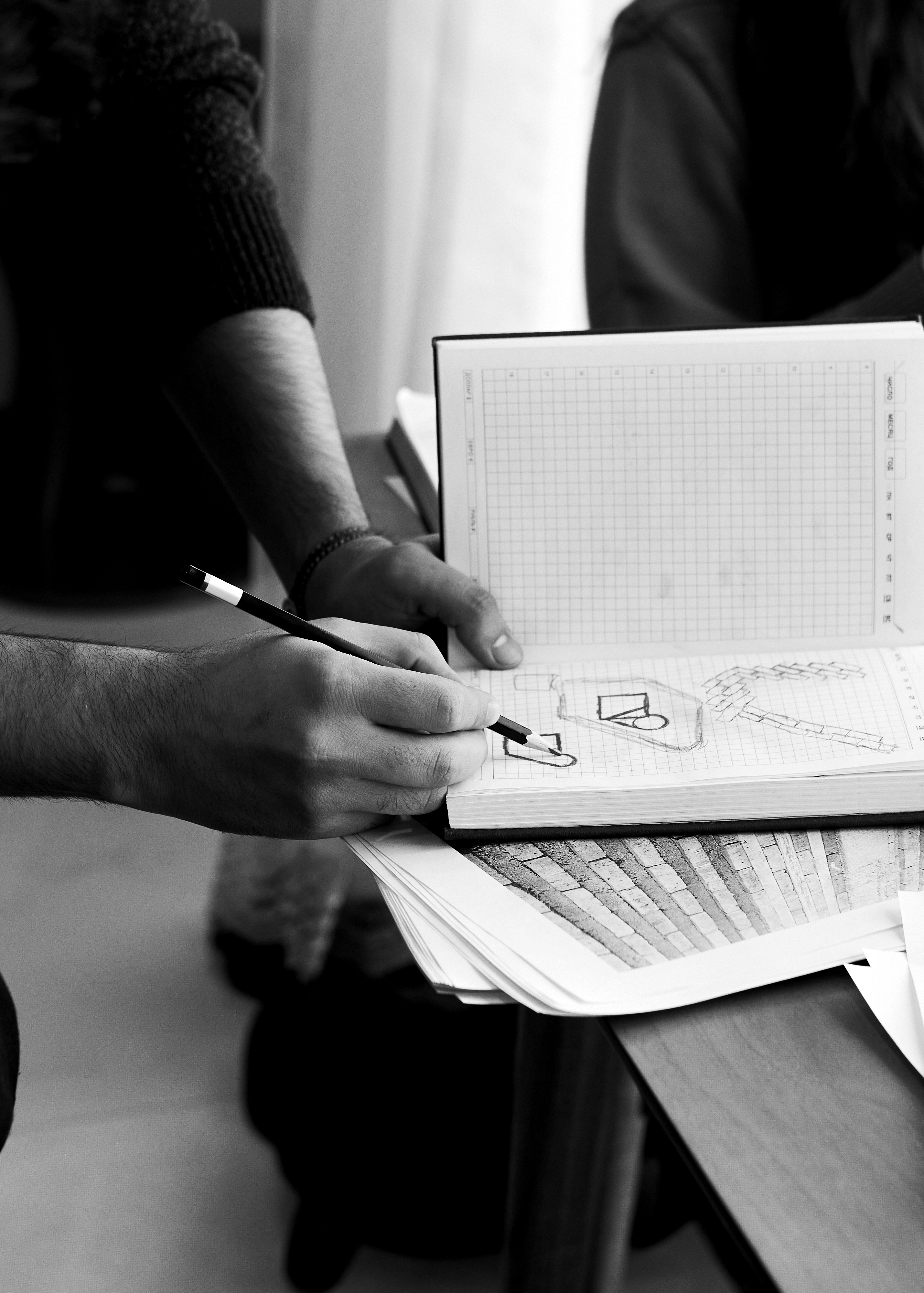
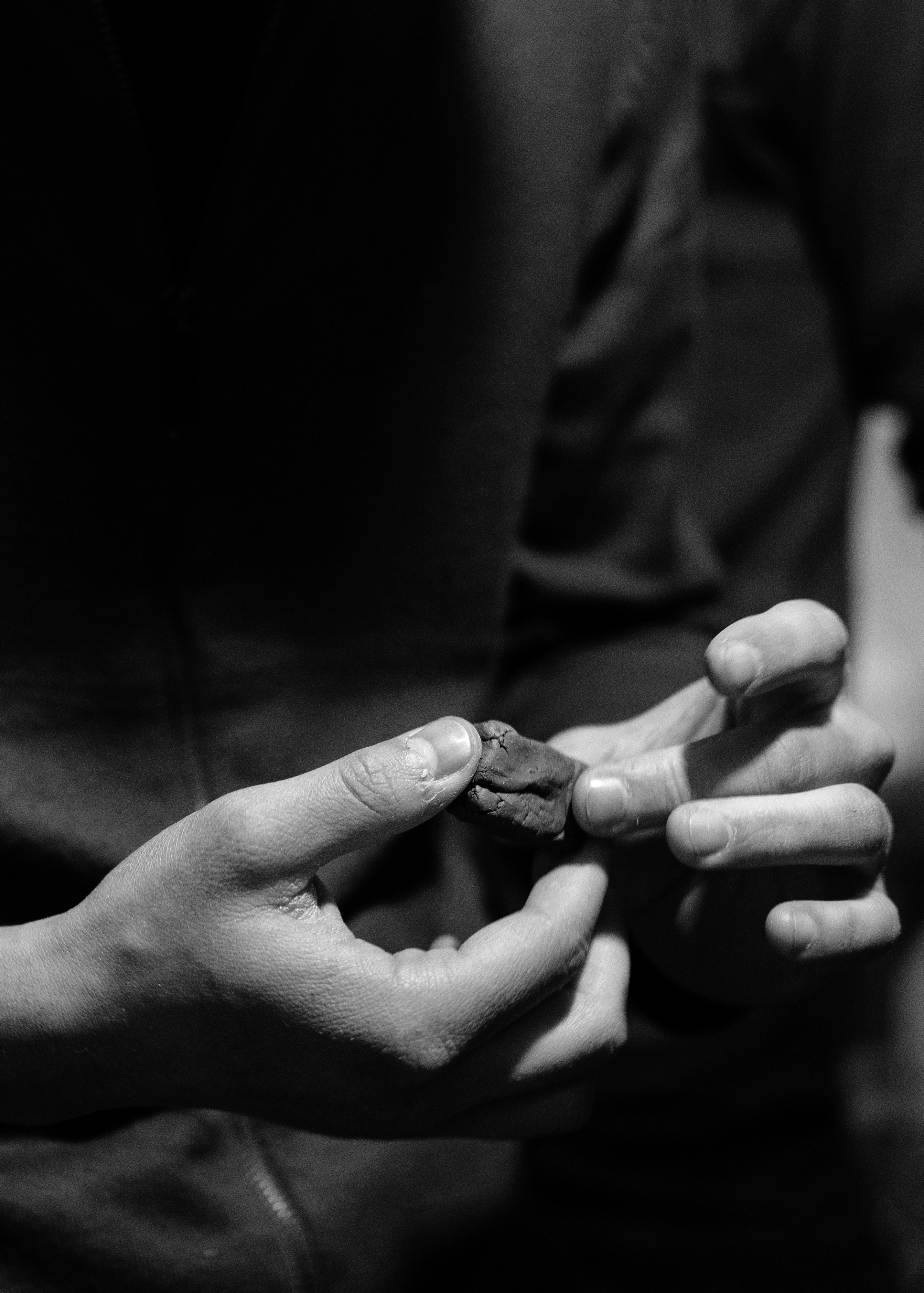
2) The second workshop, Brick, from clay to wall, focused on the materiality of bricks, with a particular focus on the secular structures such as trading buildings and caravanserais that played a significant role in international trade along the Great Silk Road. Led by Studio KO, the students from Ajou University in Tashkent observed traditional construction techniques and innovations, such as the use of kiln-dried bricks, the decorative use of bricks in architecture in Bukhara, and the mastery of brick glazing at the ceramic workshop of the artist Abdulvahid Bukhoriy.
The students were encouraged to use all types of representation to embrace the rich and varied possibilities of materiality and to find their own voice in the symphony of form and substance. Beginning with an emphasis on understanding scale, the workshop proceeded with building and photographing Nikolai brick creations with the guidance of Studio KO and Miza Mucciarelli. From the base of carved wood, to the buildings of prints, to the patterns of bricks, the students immersed themselves in the tactile and sensory experiences of selecting and manipulating different materials, exploring specificities such as textures, transparencies, and colors. The students' ideas and explorations became a part of the spatial proposal of the Uzbekistan National Pavilion.



ACDF
The Art and Culture Development Foundation under the Cabinet of Ministers of the Republic of Uzbekistan, founded in 2017 by the decree of President Shavkat Mirziyoyev, fosters international cooperation and promotes the culture of Uzbekistan on the international stage. It showcases national heritage by initiating projects in the fine arts, architecture, literature, theater, music, craft, design and dance.
The mission of the Foundation is to create an inclusive and accessible environment in the country's cultural institutions, to contribute to the renovation of museums, and to develop cultural patronage and professional training for the arts and culture sector.
18th International Architecture Exhibition – La Biennale di Venezia May 20 – November 26, 2023
17th International Architecture Exhibition – La Biennale di Venezia
April 23 – November 27, 2021
Curated by Studio KO
The Project
Mahalla: Urban Rural Living is a cross-disciplinary exhibition and research project about the urban neighbourhoods in Uzbekistan known as mahallas. The mahalla concept is multifaceted. It is a unit within an urban system, typical of Central Asia as well as of some other parts of the world. It is a form of community life, structured through rituals and traditions. And it is an important institutional authority, providing governance at the local level. The traditional mahalla layout is based on the original type of courtyard house, the open space at the heart of which is a symbolic as well as a productive backdrop to a specific way of life. In the exhibition, architects, artists, local students and researchers reflect in collaboration on the innovative potential of this traditional Uzbek institution, a mode of communal urban life. The project explores potential answers to the question raised by the Venice Biennale itself: How will we live together? Can we reconcile working and living in a single environment? Are we in need of a higher sense of community? In which density are we able to live? Should we be able to feed ourselves from our own gardens? At a time when the ecosystem of the anonymous megacity is literally reaching its limits, the need for alternatives is greater than ever. Can the social organisation of these neighbourhoods and their variable architectural configuration as low-rise / high-density structures offer urban society a sustainable model? The project aims for a critical reading and a tentative exploration.
First time in Venice
Mahalla: Urban Rural Living is the first national participation of Uzbekistan in the Venice Biennale. Commissioned by the Art and Culture Development Foundation under the Ministry of Culture of the Republic of Uzbekistan, it aims to enhance the country’s presence on the global cultural scene and to create a platform for long-term international discussion. The theme of the 17th International Architecture Exhibition was selected by the architect and scholar Hashim Sarkis, who suggested contemplating possible answers to the question How will we live together? Commissioners of the national pavilion of Uzbekistan invited two Swiss architects and ETH Zurich Professors, Emanuel Christ and Christoph Gantenbein, to respond to the question by curating a survey of the mahalla as a unique form of spatial and social organisation. They and their Adjunct Curator, Victoria Easton, invited the artists Carlos Casas and Bas Princen to provide a multidisciplinary reading of the phenomenon. As Emanuel Christ has said: ‘Mahalla is a social, cultural and urban phenomenon. It is not necessarily an answer to the question asked by Hashim Sarkis, but it could be a very rich and interesting hint and indication as to where a global contemporary society could find a vision, information, and inspiration’.
The exhibition
Curators of Mahalla: Urban Rural Living, the ETH Zurich (Swiss Federal Institute of Technology) Professors Emanuel Christ and Christoph Gantenbein, together with Adjunct Curator and Head of Research Victoria Easton, have developed a meticulous academic approach to analysing architecture. Since 2010, they have been conducting in-depth research into architectural typology. The resulting publications, Typology I and II, present an inventory of 20th-century metropolitan and essentially ubiquitous building production: a systematic yet subjective compilation of urban architecture explored through typological criteria. For the national pavilion of Uzbekistan, they examine the material and symbolic structures of the oriental vernacular city, including Soviet modernist interpretations of the mahalla, in order to better understand this successful form of urban neighbourhood.
Members of the curatorial team travelled to Uzbekistan and, with the help of local researchers and students, surveyed a significant number of buildings and gathered historical and contemporary documents depicting the evolution of this rich heritage.
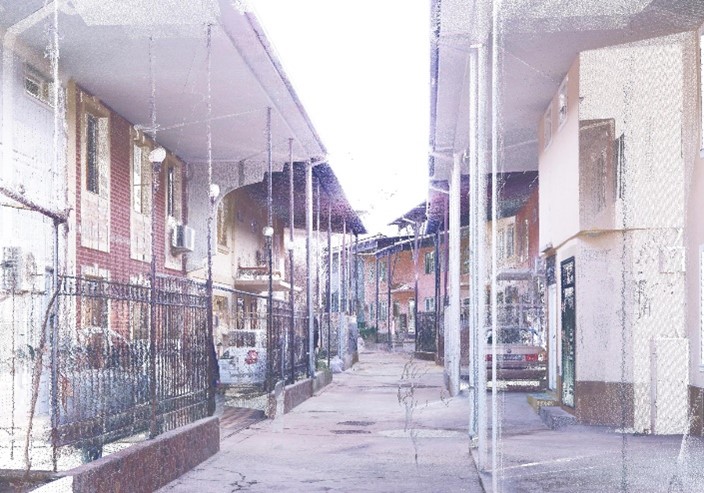
Thanks to this fruitful exchange, it was possible to closely document ten mahallas in Tashkent, the capital of Uzbekistan, where these are still a major element of the traditional urban fabric and are maintained in the most authentic way. Within these ten neighbourhoods, twenty-one houses were meticulously surveyed by means of 3D scanners. Cadastral maps, historical documents, drone imagery, street photography, floor plans and point cloud images were subsequently combined in a catalogue of the mahallas’ various typologies and typological elements.
The research was funded by the ACDF and the ETH Zurich and supported by the Union of Architects of the Republic Uzbekistan and Tashkent Institute of Architecture and Civil Engineering. Additionally, a number of local students and members of CCA Lab, a research laboratory of the Center for Contemporary Art in Tashkent, assisted with the research, collecting interviews and information in situ. How will we live toether?
The exhibition brings the mahalla phenomenon to Venice with the goal of offering visitors an immersive experience of this architecture and way of life. Mahalla: Urban Rural Living draws on a collaboration between the academic researchers and the artists. To enhance the objective analysis of the urban phenomenon, photographer Bas Princen and sound artist and filmmaker Carlos Casas have added aesthetic and emotional layers to the project.
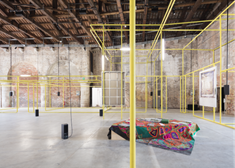
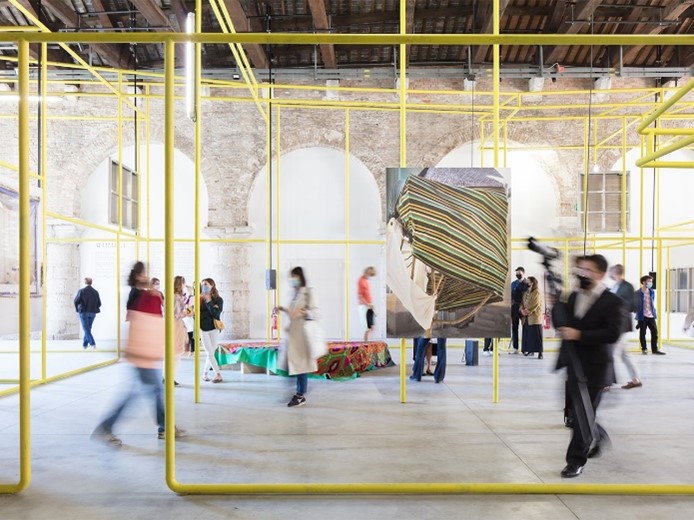
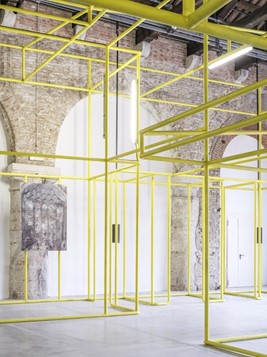
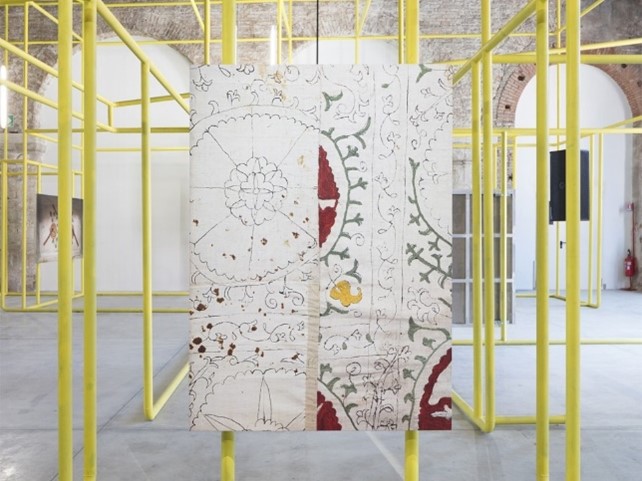
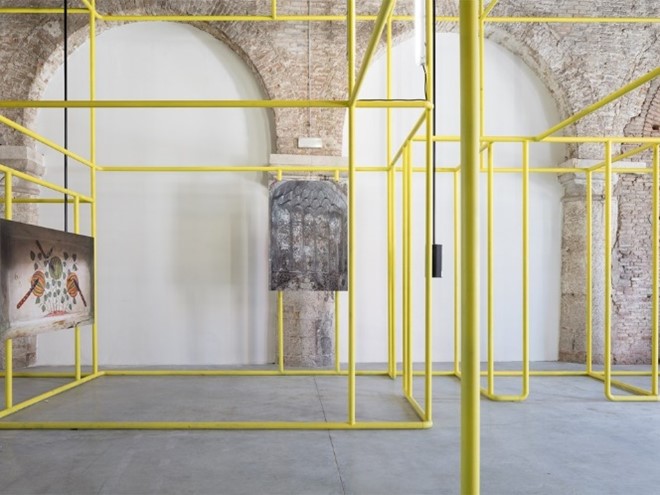
The exhibition approaches the mahalla by juxtaposing different modes of representation at a 1:1 scale. A life-size Tashkent house has taken shape within the Arsenale as an abstraction, recreated as a tubular steel silhouette within the Renaissance-era industrial architecture of the Quarta Tesa. It is both an approximation of the real house from which it derives and an architectonic endeavour to make the idea of a type physically present and tangibly real. The abstract architecture of the house, the reduction to pure space, is complemented by twelve of Bas Princen’s photographs: likewise on a scale of 1:1, they imbue the exhibition with the haptic material quality of the houses. Surfaces in close-up speak of the technical construction of this architecture of the craft that goes into it, and of furnishings and everyday usage. In several rooms of the house, Carlos Casas presents spatial soundscapes cut from his on-site live recordings of the sounds of people, animals and machines in Tashkent.
The exhibition is accompanied by a free catalogue and a smartphone app: a digital tool, allowing visitors to enhance their experience through an elaborate 3D model. The national pavilion of Uzbekistan occupies the Quarta Tesa, a part of the Squero delle Gaggiandre built by Jacopo Sansovino in the 16th century. This large space is favourably situated on the pathways between the two primary Biennale venues – the Arsenale, a former shipyard, and the Giardini gardens – so Biennale visitors are assured easy access to it.
Materials used for the exhibition design are standard products which can be easily dismantled and recycled. Uzbekistan, ACDF and ETH Zurich are committed to a sustainable and responsible practice towards people and the environment.
Organization
Mahalla: Urban Rural Living has been commissioned by Art and Culture Development Foundation (ACDF) under the Ministry of Culture of the Republic of Uzbekistan. The Foundation is a governmental institution that organises cultural projects both in Uzbekistan and internationally. It initiates and supports cross-disciplinary events in various cultural sectors, including fine art, literature, theatre, music, architecture and choreography.
The Foundation’s strategic aims include the promotion of Uzbekistan in the international arena, the establishment of cultural networks and the development of platforms for local talent. In recent years, the Foundation has collaborated with a number of global organisations, contributing to the development of cultural infrastructure and preservation of heritage. Additional assistance to the project has been provided by CCA Lab, a research laboratory of the Center for Contemporary Art in Tashkent. Its mission is to develop contemporary art and cultural practices in Uzbekistan, as well as to formulate new readings and a new understanding of the region’s artistic heritage.
Artists
Bas Princen is a Dutch artist and photographer living and working in Rotterdam and Zurich. He has a background in industrial design and studied architecture at the Berlage Institute in Rotterdam. Through the use of photography, he focuses on the urban landscape in transformation, researching various forms, outcomes and imaginary visions of changing urban space.
In his practice Princen explores the relationship of architecture and image – capturing and exploring how three-dimensional structures can be transformed and represented. He reframes them, creating objective reflections that alter the viewer’s perception.
Carlos Casas is a prominent Spanish filmmaker and artist whose practice encompasses film, sound and visual art. His films have been screened at festivals and major art institutions around the world, including Tate Modern (London), Fondation Cartier, Palais de Tokyo, Centre Pompidou (Paris), Hangar Bicocca (Milan), among others.
For Mahalla: Urban Rural Living Carlos Casas has created a new sound piece that adds a subjective layer to the academic research.
Curators
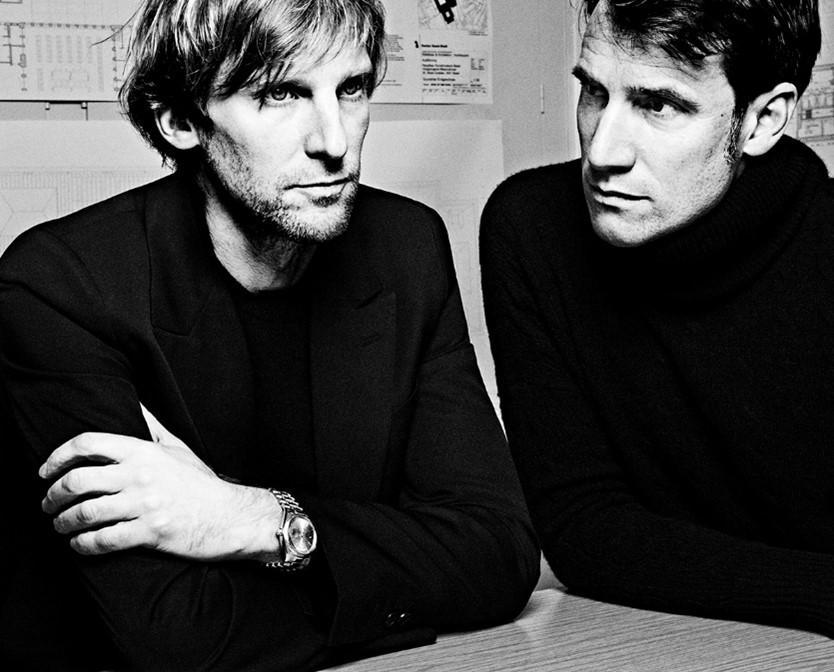
Emanuel Christ and Christoph Gantenbein are professors of architecture at ETH Zurich, the Federal Institute of Technology, a public university in Switzerland. Their research revolves around the changing nature of contemporary metropolises. The core interest is to examine the potential of existing city architecture as a building block for a sustainable, dense and urban city of the future. Drawing on the exposition of typological features of architecture, their attention is particularly focussed on the ubiquitous urban context. It is the unspectacular, often overlooked everyday types of building, the grey city, the ordinary case, the ‘architectural microorganisms’ which make cities viable. The description of this ‘typical case’ in a city serves to illuminate the architectonic structures within which everyday life unfolds. Typology is insofar a comparative means of lending a voice to anonymous vernacular or modern architecture, in this case, to the mahallas of Tashkent, written records of which are relatively rare. The ETH Zurich team has already carried out similar surveys in Hong Kong, Buenos Aires, New Delhi, Paris, New York and other modern metropolises. There too, the focus was on the typical building blocks that predominate in the cityscape and thus determine the individual city’s character and viability.
In their capacity as full professors at ETH Zurich, Emanuel Christ and Christoph Gantenbein, together with Adjunct Curator and Head of Research Victoria Easton, have curated and designed Mahalla: Urban Rural Living, the first national pavilion of Uzbekistan at the Venice Biennale. The multidisciplinary contribution, fusing research, photography, soundscapes, and architecture, is a scientific investigation and an artistic statement about a traditional form of living in Uzbekistan. Besides academic work, Emanuel Christ and Christoph Gantenbein have been running the international practice Christ & Gantenbein since 1998, headquartered in Basel, Switzerland. The firm’s most prominent completed projects include the expansion and transformation of the Swiss National Museum in Zurich and the extension of the Kunstmuseum Basel, both cultural landmarks with a global reach. Recently, they won the international competition for the extension of the MACBA, a preeminent Barcelona institution.
Credits
Organization: Ministry of Culture of the Republic of Uzbekistan
Commissioner: Art and Culture Development Foundation under the Ministry of Culture of the Republic of Uzbekistan; Gayane Umerova, Executive Director of Art and Culture Development Foundation under the Ministry of Culture of the Republic of Uzbekistan
Curators: Prof. Emanuel Christ, Prof. Christoph Gantenbein, Victoria Easton (Adjunct Curator & Head of Research), ETH Zurich
Artists: Carlos Casas, Bas Princen
Special support: Saida Mirziyoyeva, Deputy Chairman of the Council of the Art and Culture Development Foundation under the Ministry of Culture of the Republic of Uzbekistan
Organising committee: Aziz Abdukhakimov, Deputy Prime Minister and Minister of Tourism and Sports
Ozodbek Nazarbekov, Minister of Culture of the Republic of Uzbekistan
Gayane Umerova, Executive Director of Art and Culture Development Foundation under the Ministry of Culture of the Republic of Uzbekistan
In collaboration with: The Ministry of Tourism and Sport of the Republic of Uzbekistan; Ministry of Foreign Affairs of the Republic of Uzbekistan; Embassy of the Republic of Uzbekistan in the Italian Republic
Project leader: Stefano Zeni, ETH Zurich
Project management: Madina Badalova, Art and Culture Development Foundation under the Ministry of Culture of the Republic of Uzbekistan
Research & editing: Giulio Galasso, Francesco Zorzi, ETH Zurich; Natalia Voroshilova
Project assistants: Alsu Akhmetzyanova, Dilorom Tursunova, Jamshid Alimkhanov, Jasur Asliev, Abduvali Murodov, Asal Atarbaeva, Dildora Yakubjanova, Temur Ortiqov, Asror Khodjaev, Art and Culture Development Foundation under the Ministry of Culture of the Republic of Uzbekistan
Local media management: Elmurod Nadjimov, Arthur Kha, Nigora Tursunova, Victoria Chugay, Feruza Tolipova, Aziza Rakhmatova. Art and Culture Development Foundation under the Ministry of Culture of the Republic of Uzbekistan
Research support: The Union of Architects of the Republic of Uzbekistan; Tashkent Institute of Architecture and Civil Engineering
Associate consultant: Saodat Ismailova, CCA Lab Creative Curator
Consultant to the research: Prof. Shukur Askarov, Boris Chukhovich, Artyom Kosmarsky, Prof. Mukaram Nurmatova, Gulnora Tangabaeva, Alexey Ulko, Prof. Mavlyuda Yusupova, Prof. Abdumannop Ziyaev
Student collaboration: Timur Amanshikov, Mumtoz Ashrafkhanova, Anastasia Galimova, Munis Juraeva, Rahim Kalibaev, Valeria Kim, Sabina Lutfirahmanova, Rinata Mansurova, Kumush Mukhamadkarimova, Aziza Pulatova, Muhitdin Riskiev, Laziza Tulyaganova, Saida Turabekova, Malika Zayniddinova, Rustam Zakhidov, CCA Lab participants; Héloise Dussault-Cloutier, Senga Grossmann, Nicolas König, Elisaveta Kriman, Simona Mele, ETH Zurich
Graphic design: Francesca Pellicciari, Francesca Biagiotti, pupilla grafik
Digital design: Giga Design Studio
Audio production: Année Zero, Paris, Stéphane Demoustier, Benoît Martin, Guillaume Brac, Igor Auzépy, Margaux Riviere
Audio mixing: La cave à son, Marc Parazon
Spacial mixing: Les Sons Animées; IRCAM, Armand Leseq
Communication & PR: MAY, Communication & Events
Copy-editing and translation: Gulchekhra Abbasova, Jaimee Comstock-Skipp, Jill Denton, Umida Sadikova, Denis Stolyarov