
60th International Art Exhibition – La Biennale di Venezia
April 20 – November 24, 2022
Supported by Saida Mirziyoyeva, Advisor to the President of the Republic of Uzbekistan
Commissioned by Gayane Umerova, Chairperson of the Uzbekistan Art and Culture Development Foundation
Don’t Miss the Cue
Curated by Institution of the
Centre for Contemporary Art Tashkent
Preview: April 16 – 19, 2024
On View: April 20 – November 24, 2024
Location: Quarta Tesa (Arsenale)
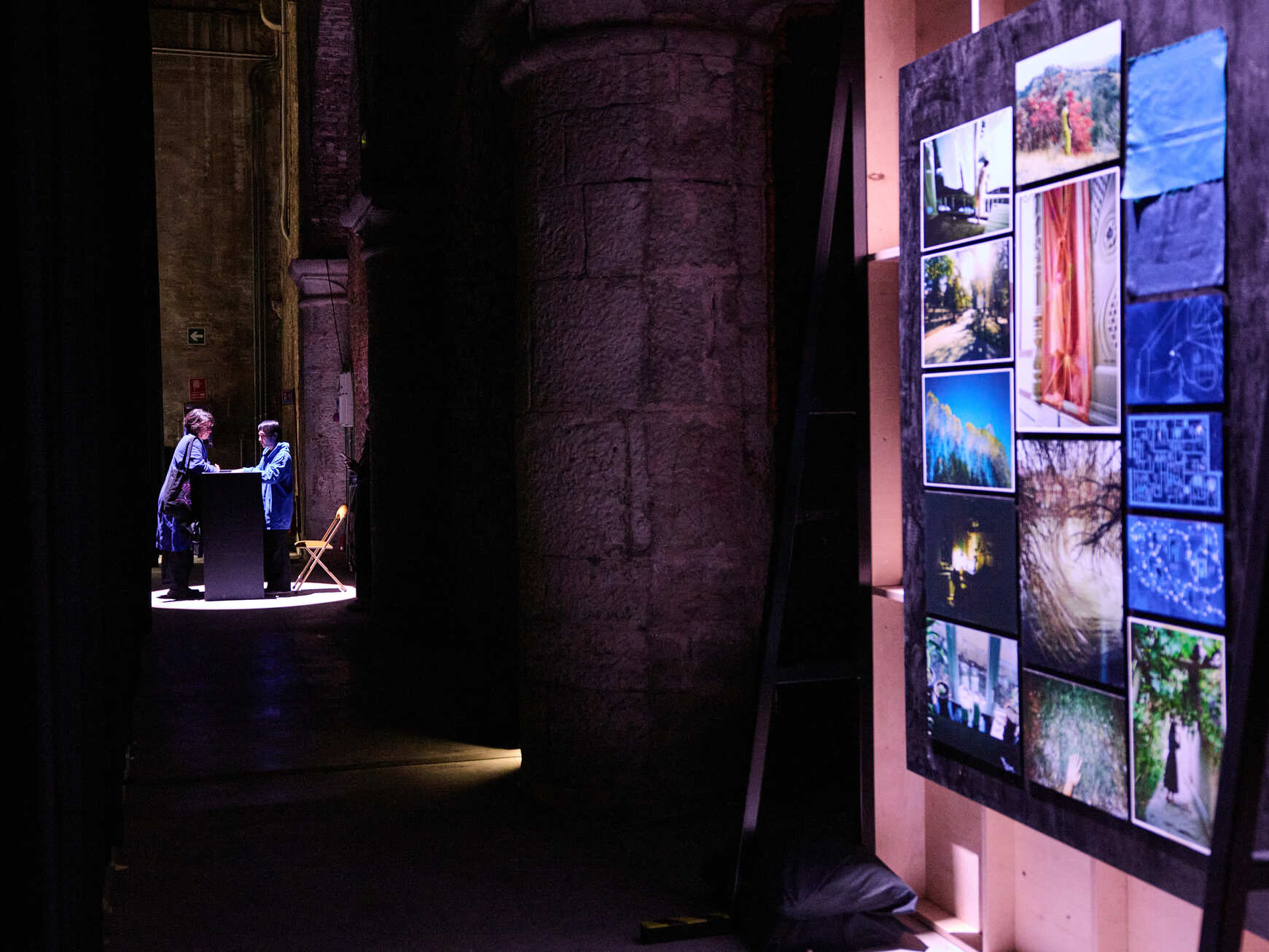
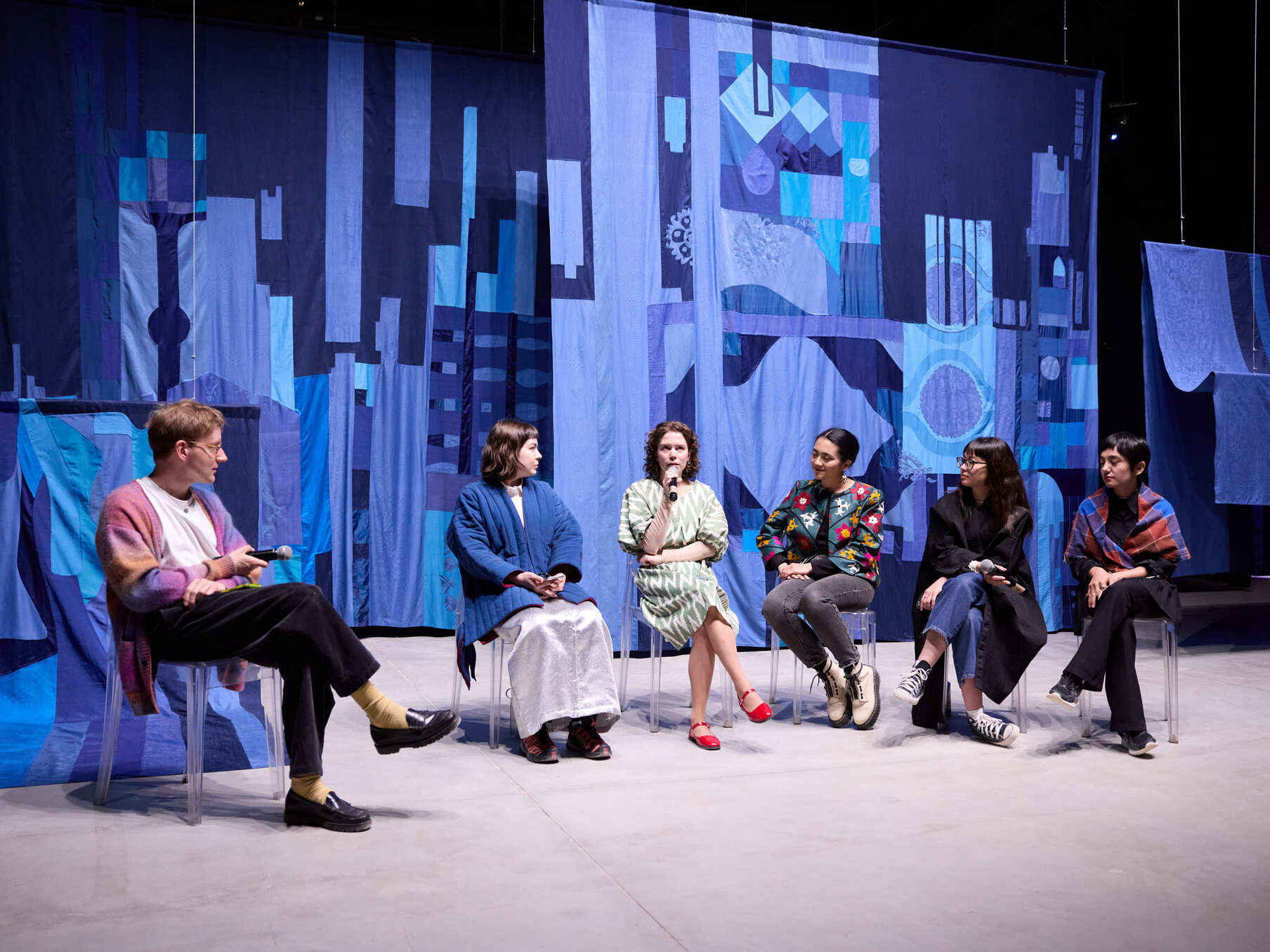
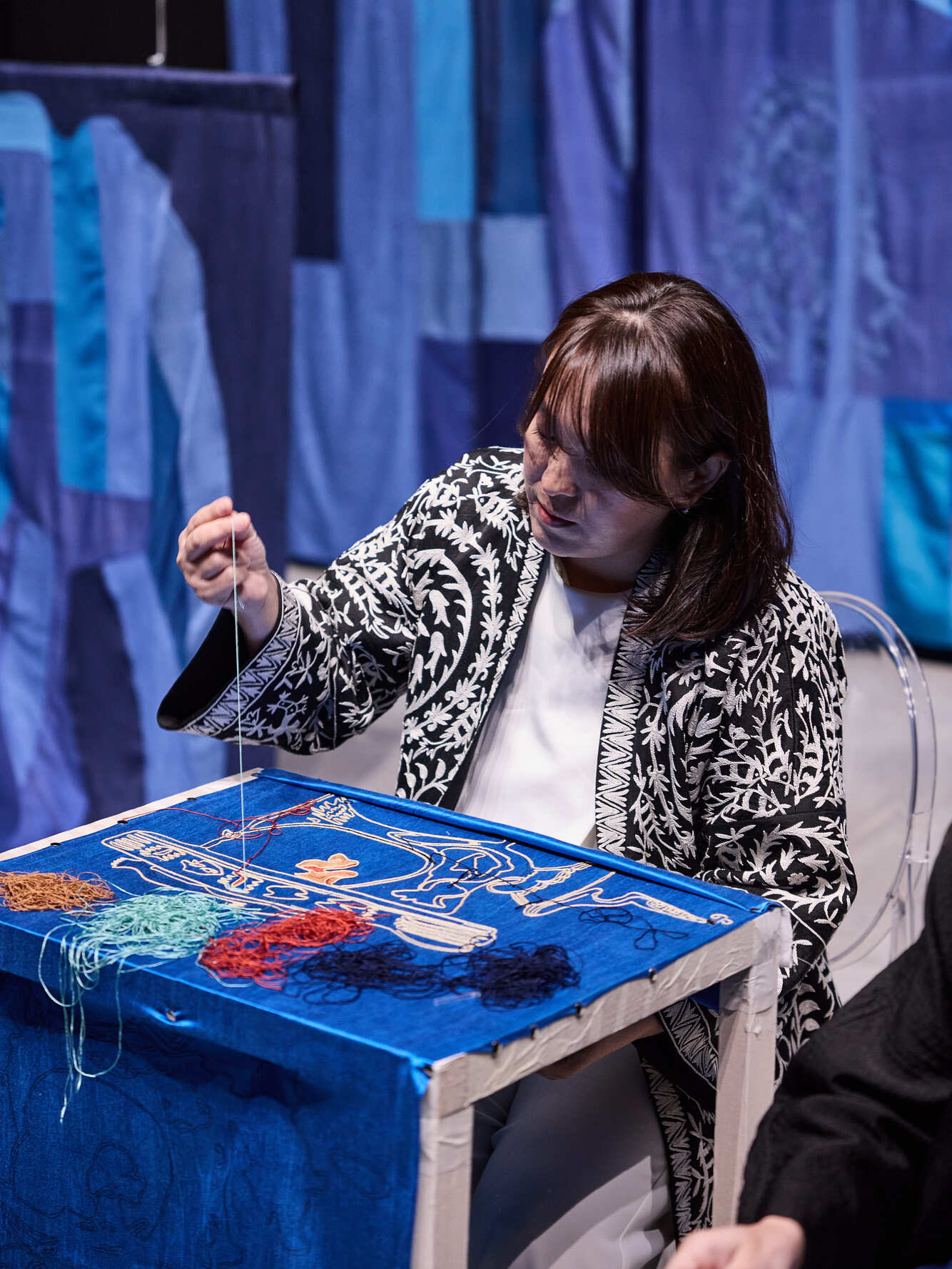
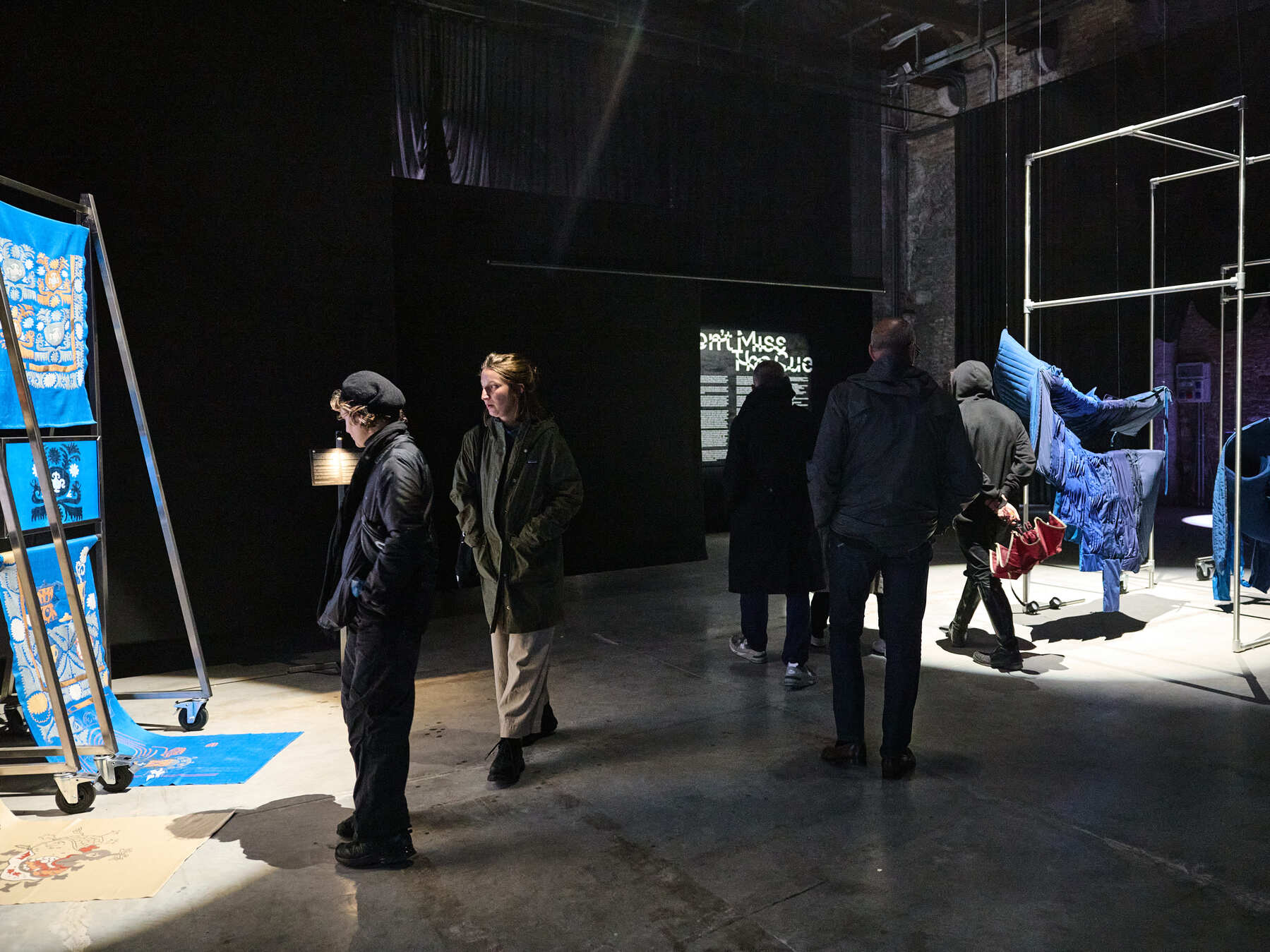
The Uzbekistan Art and Culture Development Foundation announces the participation of the Republic of Uzbekistan to the 60th International Art Exhibition — La Biennale di Venezia, running from April 20 to November 24, 2024. This year, the pavilion entitled “Don’t Miss the Cue”is curated for the first time by the Centre for Contemporary Art Tashkent, and sees the Uzbek artist Aziza Kadyrileading the project. The exhibition “Don’t Miss the Cue” will also feature a collaboration with the Qizlar collective, a Tashkent-based artists group.The key objects presented in the pavilion will be a series of embroideries handcrafted by the suzani master Madina Kasymbaeva. The central piece is a theater curtain, also created by Madina. Resonating with the theme of the 60th International Art Exhibition — La Biennale di Venezia “Stranieri Ovunque - Foreigners Everywhere”, set forth by the curator Adriano Pedrosa, the exhibition "Don’t Miss the Cue" addresses issues of belonging and identity through the experiences of women from Central Asia, offering insight into how they navigate and redefine themselves in the migration process."For me personally, the collaborative aspect of the creative process is a key moment where women's voices, representing various experiences — migration, transformation, and overcoming — come together. Together, we reinterpret ways of interacting with cultural and historical heritage, particularly textiles and costumes, traditionally associated with 'female' crafts — through the synthesis of art and technology as tools for exploring contemporary Uzbek identity," says artist Aziza Kadyri.The concept of the exhibition project "Don’t Miss the Cue"is directly related to the theme of the Biennale Arte 2024: entering the Tesa, visitors will embark on a complex migration journey, rethinking their personal experience through interaction with installations. The exhibition creates an atmosphere of theatrical backstage, inspired by the Houses of Culture that were located throughout Eurasia in the early 20th century.
The theatrical setting comes to life through sculptures created from sketches of traditional costumes, complemented by audiovisual materials by the Qizlar Collective group of female artists. The project focuses on women's stories, collective practices, and the complex relationships between the physical body and the surrounding world."It is extremely important for us to reveal the theme of women's identity. The artistic meanings embedded in the project's concept are reflected in both the exhibition and the catalogue, where we strive to provide space for women's voices and experiences. Working together on the National Pavilion of Uzbekistan is an amazing and significant experience for the entire collective," says Anastasia Kurylova, Executive Director and Coordinator of Qizlar Collective.The exhibition also explores the interaction between technology and tradition. The characteristic Uzbek hand embroidery "suzane" is reinterpreted through artificial intelligence technology. The recognisable patterns of "suzane" processed by artificial intelligence lose their original appearance and are virtually unidentifiable. This combination not only reinterprets traditional patterns but also highlights cultural changes in the modern world. As a result, visitors can better understand the impact of technology on culture and identity by going through all installations, rethinking their personal experience in the process.The National Pavilion of Uzbekistan was first presented at the Biennale Architettura 2021, with Uzbekistan also participating in the Biennale Arte 2022 and the Biennale Architettura in 2023. In 2024, for the first time, the curator is the Centre for Contemporary Art Tashkent.
Curator
The Centre for Contemporary Art Tashkent is a space for the development and support of contemporary culture in Central Asia. The building was constructed in 1912. Before the revolution, it housed a diesel power station that produced energy for the city's first street car line. It was here that the electrification of the city of Tashkent began. This is also where the renewal of the artistic environment of modern Uzbekistan will begin. It opened in 2019 and operating in test mode since then. The Centre hosted lectures, public discussions, film screenings, workshops for children and adults. Film directors, artists, curators, architects, museum professionals and heads of institutions from France, Italy, Germany, Great Britain, Norway, Singapore, USA and Uzbekistan were invited to speak at the Centre. In late 2021 the Centre hosted the exhibition Dixit Algorizmi by Josef Grima, Italian architect, art critic, curator, and editor, who was displayed at the Uzbekistan National Pavilion at the Biennale Arte 2022.
Artists
Aziza Kadyri Multidisciplinary artist with a focus on extended reality (AR/VR), live/digital performance, experimental costume, and textiles. Kadyri's approachis grounded in a fusion of collaboration and interdisciplinary methodologies that drive the creation of both physical and digital immersive experiences. She is also interested in participatory practices with local communities. Her projects explore the themes of migration, displacement, social invisibility, identity, decolonisation, feminism, and language.
Associate artists
Qizlar collective is a self-organized collective of female activists, cultural and artistic figures from Uzbekistan, founded in 2022. The collective's mission is to unite young women from Uzbekistan engaged in unstable creative industries and create a collective platform to challenge the dominance of cis-masculine views in media, institutions and structures. Sofia Seitkhalil is a multidisciplinary artist from Tashkent and a member of the Qizlar Collective. In her works she captures observations of the city and reflects on the experience of living with relatives and loved ones. Anastasia Sever is an activist, grassroots researcher, producer, co-founder and executive director of the Qizlar Collective, based in Tashkent. Her interests range from art and women’s rights to climate change and inclusivity.
Suzani master
Madina Kasimbaeva founded Suzani by Kasimbaeva in 2006 and in less than two decades she has established herself as a creator of unique pieces sought after by fashion icons and global museums. She collaborates with local brands, sells her works to international collectors and creates attires for political leaders and popular artists. Kasimbaeva started learning embroidery at a young age, and dedicated herself to the ancient art of suzani, studying regional schools, traditional patterns and techniques.
Collaborators
Amalia Aibusheva is a DIY singer-songwriter based in Tashkent. Her music comes to life in the heart of her home, where she shares demos with her inner circle – mother, grandma and friends. Starting with raw tracks about GTA: San Andreas, her living room has evolved into a personal sanctuary for creativity. Camilla Anvar is an Uzbek actor and artist based in London. She graduated from the Edinburgh College of Art with a BA in Sculpture and received an MFA in Acting from LAMDA, London. She wears her keys on a carabiner.
Gulnoza Irgasheva is a transdisciplinary grassroots researcher, moving-image artist, and a member of the SOUP collective.Her research focuses on women’s agency in Islam, collective practices, (un)learning filmmaking methodology and alternative epistemologies.
Fanis Sakellariou is a performance artist, director and sound designer. Using the notion of post-humanism and the transformative qualities of primal rituals, he explores the human condition and possible links between the origin and the future of our species.His work has been presented in Athens, London, Berlin, Prague, Tokyo, Oslo and Calgary. He received an MA in Performance Design & Practice from Central Saint Martins, London.
Kamila Zakhidova is a transdisciplinary practitioner in the fields of editorial and identity design, critical theory, print, publishing and pedagogy. With a focus on fostering solidarity within socially engaged art practices, Zakhidova collaborates closely with Central Asian collectives, grassroots practitioners, decision-making bodies, artists, printers and various stakeholders to shape socio-cultural transformations. She currently lives in Tashkent.
Credits
Organiser: Uzbekistan Art and Culture Development Foundation
Special support: Saida Mirziyoyeva, Advisor to the President of the Republic of Uzbekistan
Commissioner: Gayane Umerova, Chairperson of the Art and Culture Development Foundation under the Cabinet Ministers of the Republic of Uzbekistan
Curators: Institution of the Centre for Contemporary Art Tashkent
Artist: Aziza Kadyri
Associate artists: Qizlar Collective (Anastasia Sever, Sofia Seitkhalil, Gulnoza Irgasheva)
Suzani master: Madina Kasimbaeva
Conceptual development: Kamila Zakhidova
Soundscape: Fanis Sakellariou, Amalia Aibusheva
Project management: Laziza Akbarova, Malika Zayniddinova, Bekzod Ulmasov
Exhibition design and architecture: ADRA Studio, Sophia Bengebara, Pauline Ouazana, Othmane Bengebara
Artist’s assistant: Camilla Anvar
Studio coordinator: Denis Stolyarov
Production assistants: Maria Bracher, Leah Bradbury, Caitlin DeLaRosa-Rodriguez, Mouse Green, Corinna Francavilla, Lia Persad, Kristina Rhodes
Graphic design: Studio Pupilla
Copy editor and proofreader: Melissa Larner
Exhibition production: We Exhibit
Communication and PR: Svetlana Chistiakova, Anastasia Sinitsyna
Press office: Elmurod Najimov
Uzbekistan National Pavilion
La Biennale di Venezia – Venice, Arsenale (Quarta Tesa
59th International Art Exhibition – La Biennale di Venezia
April 23 – November 27, 2022
Supported by Saida Mirziyoyeva, Deputy Chairwoman of the Council of the Art and Culture Development Foundation of the Republic of Uzbekistan
Commissioned by Gayane Umerova, Executive Director of the Art and Culture Development Foundation of the Republic of Uzbekistan
Curated by Space Caviar and Sheida Ghomashchi
Preview: April 20 – 22, 2022
On View: April 23 – November 27, 2022
Location: Quarta Tesa (Arsenale)
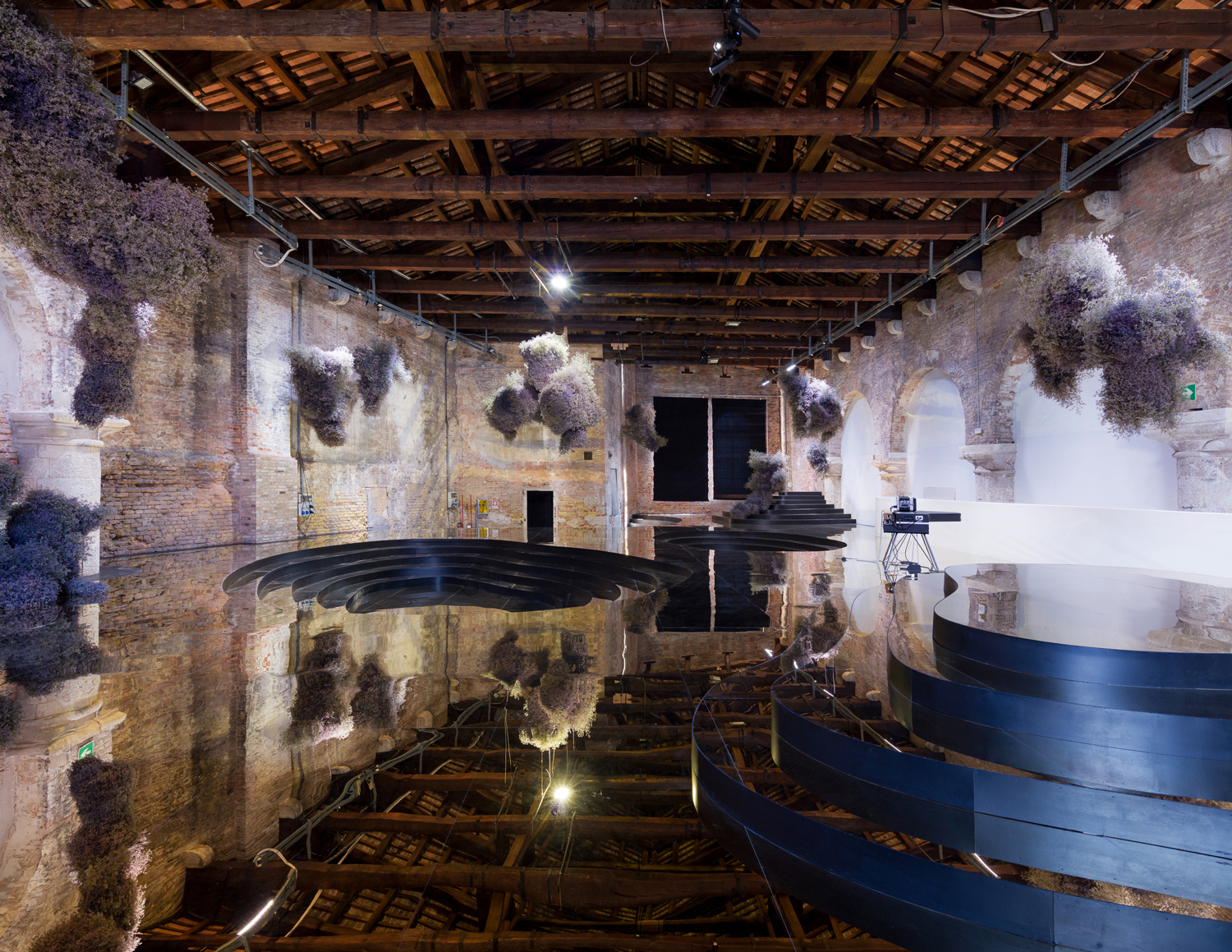
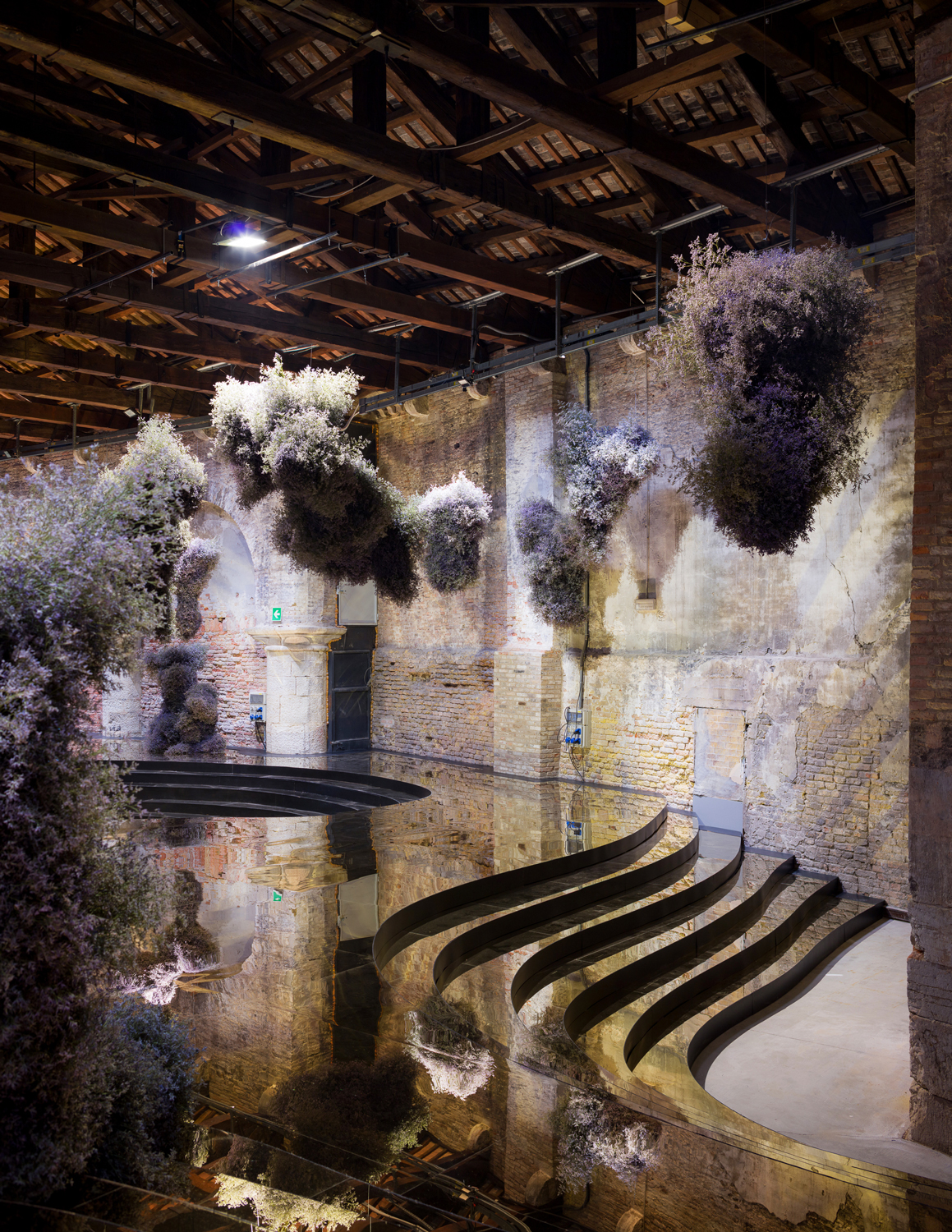
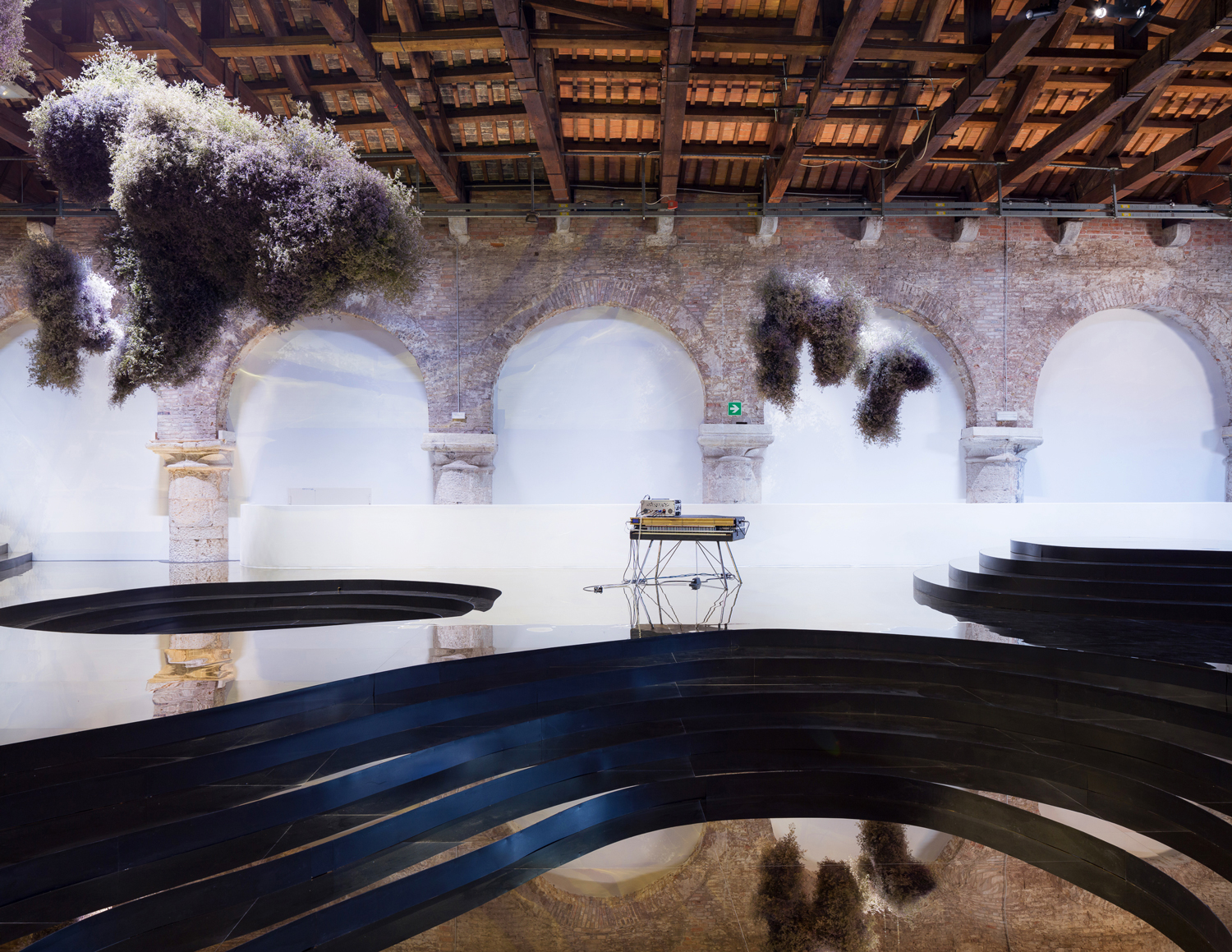
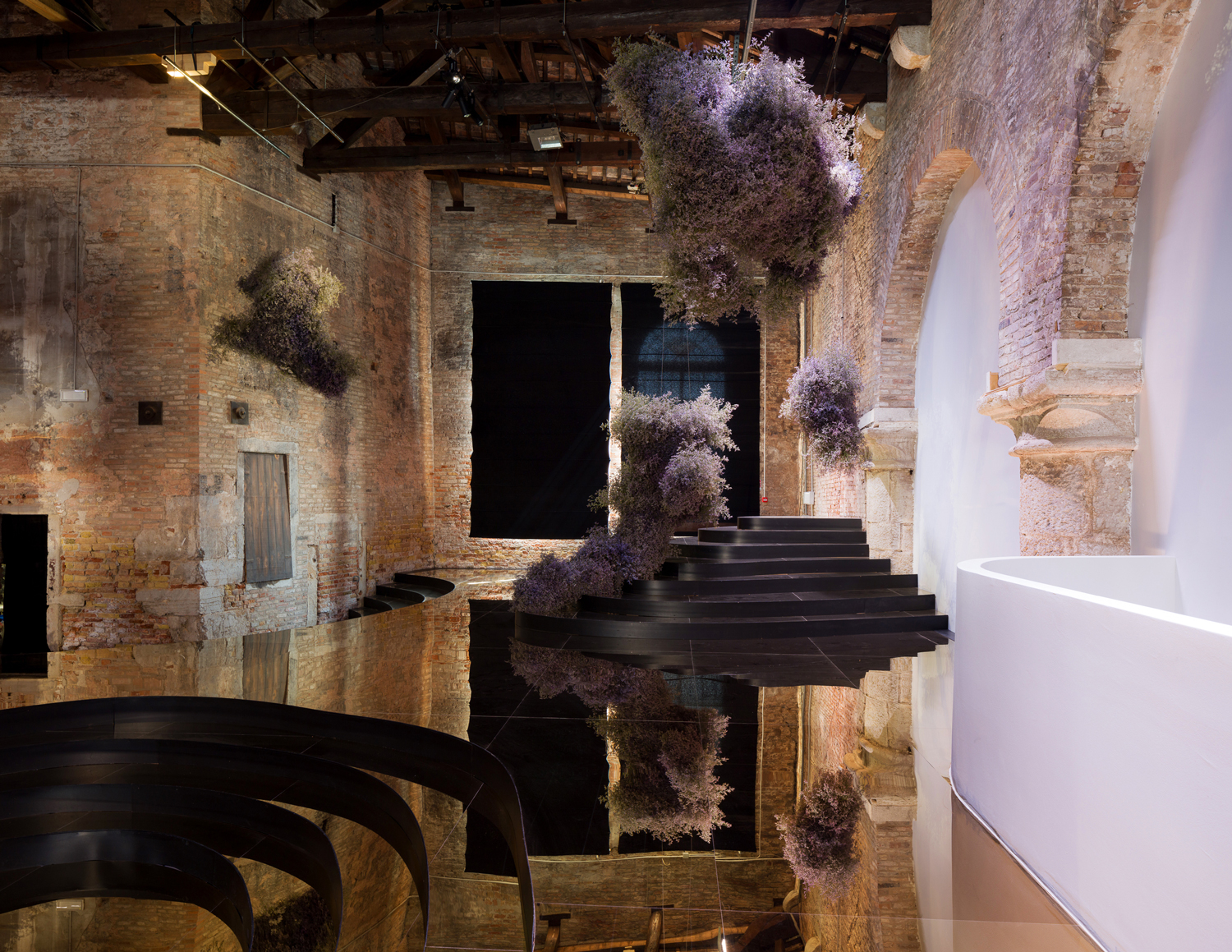
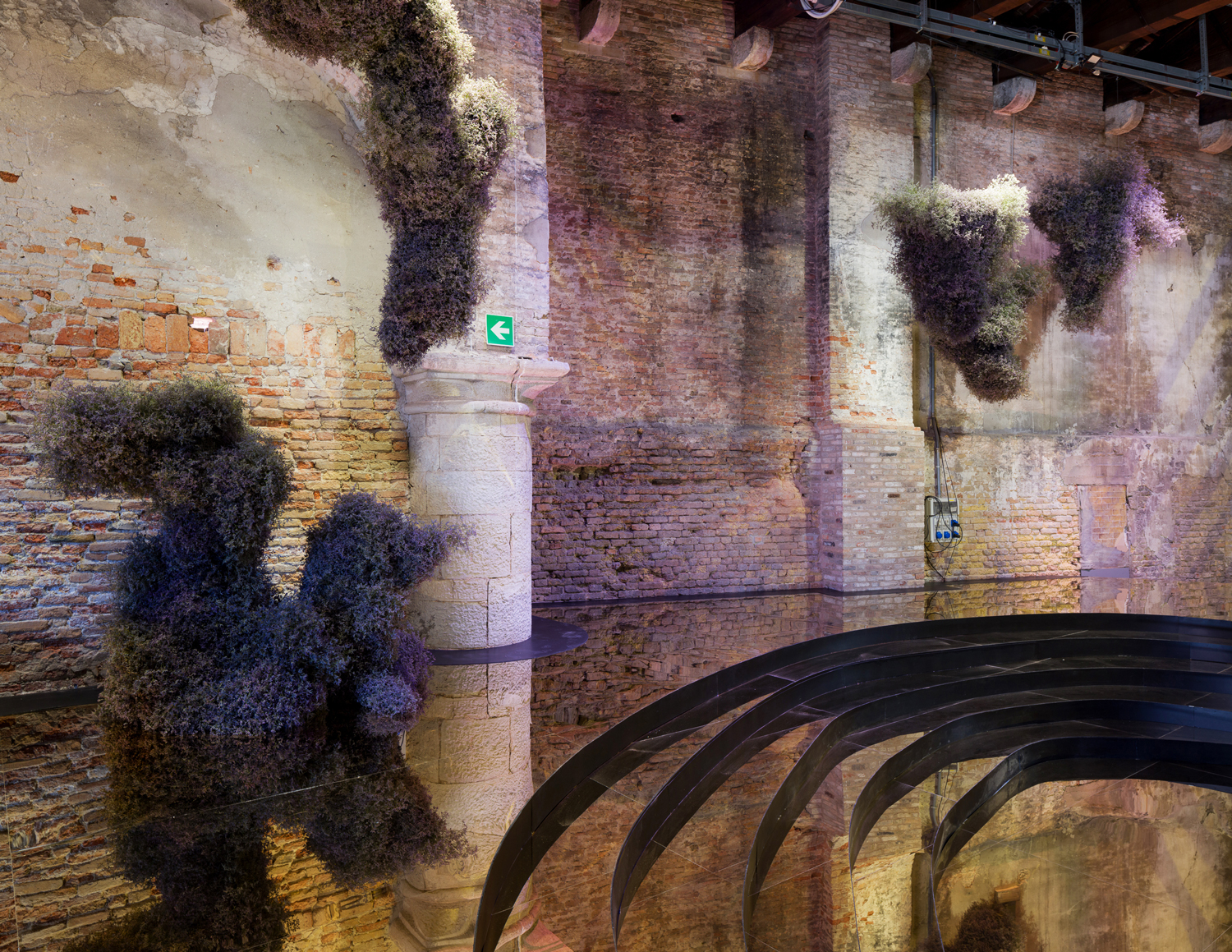
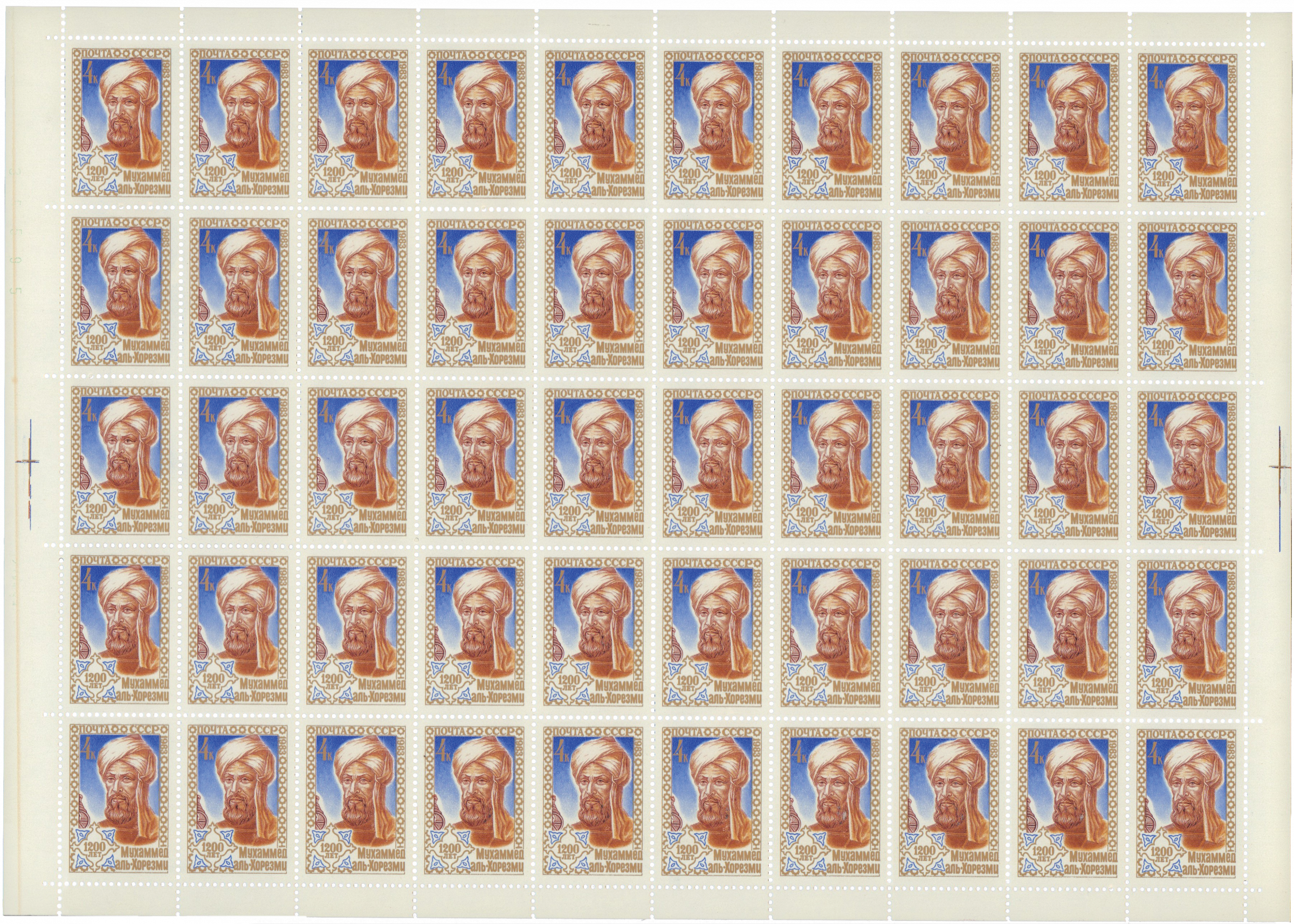
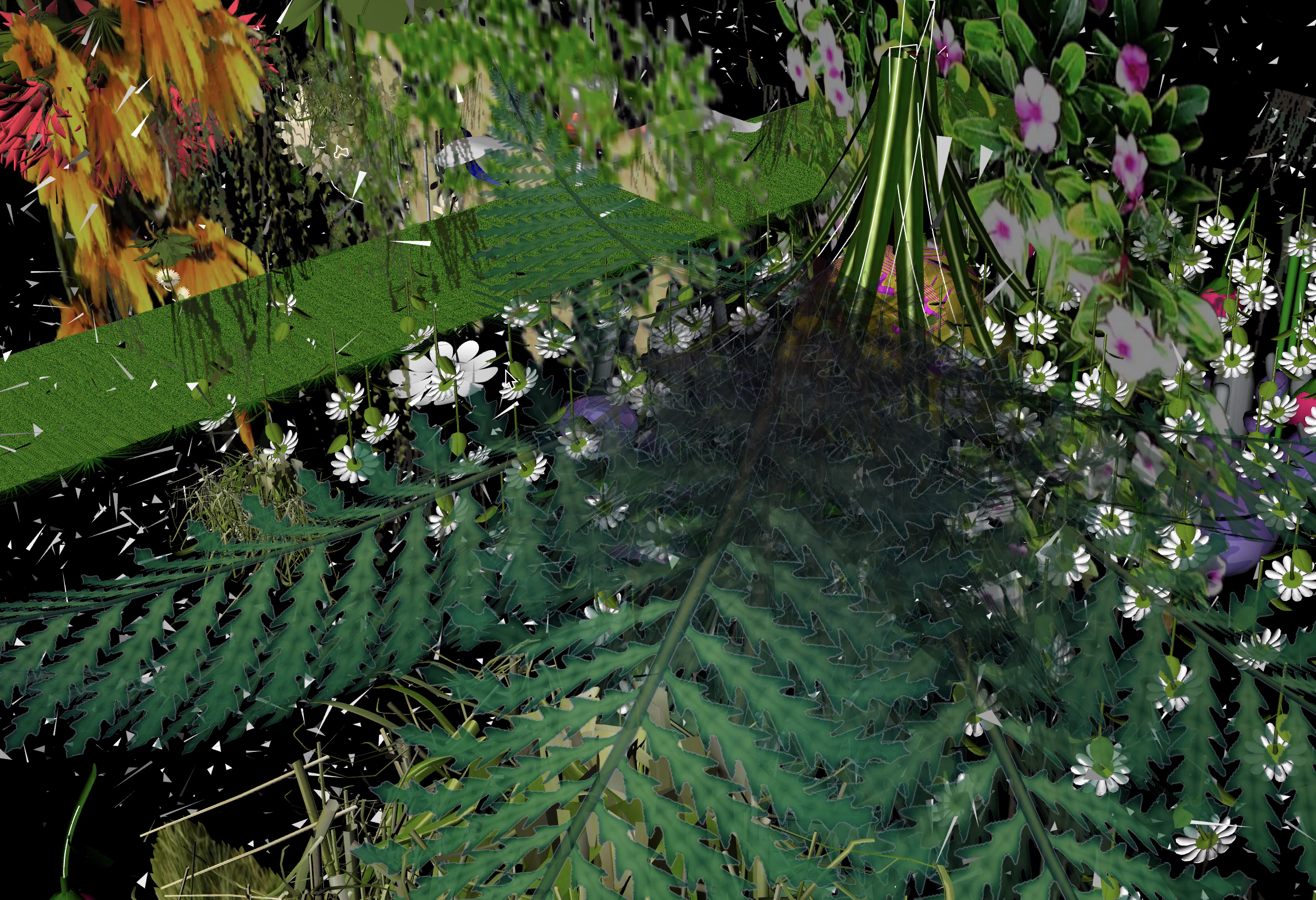
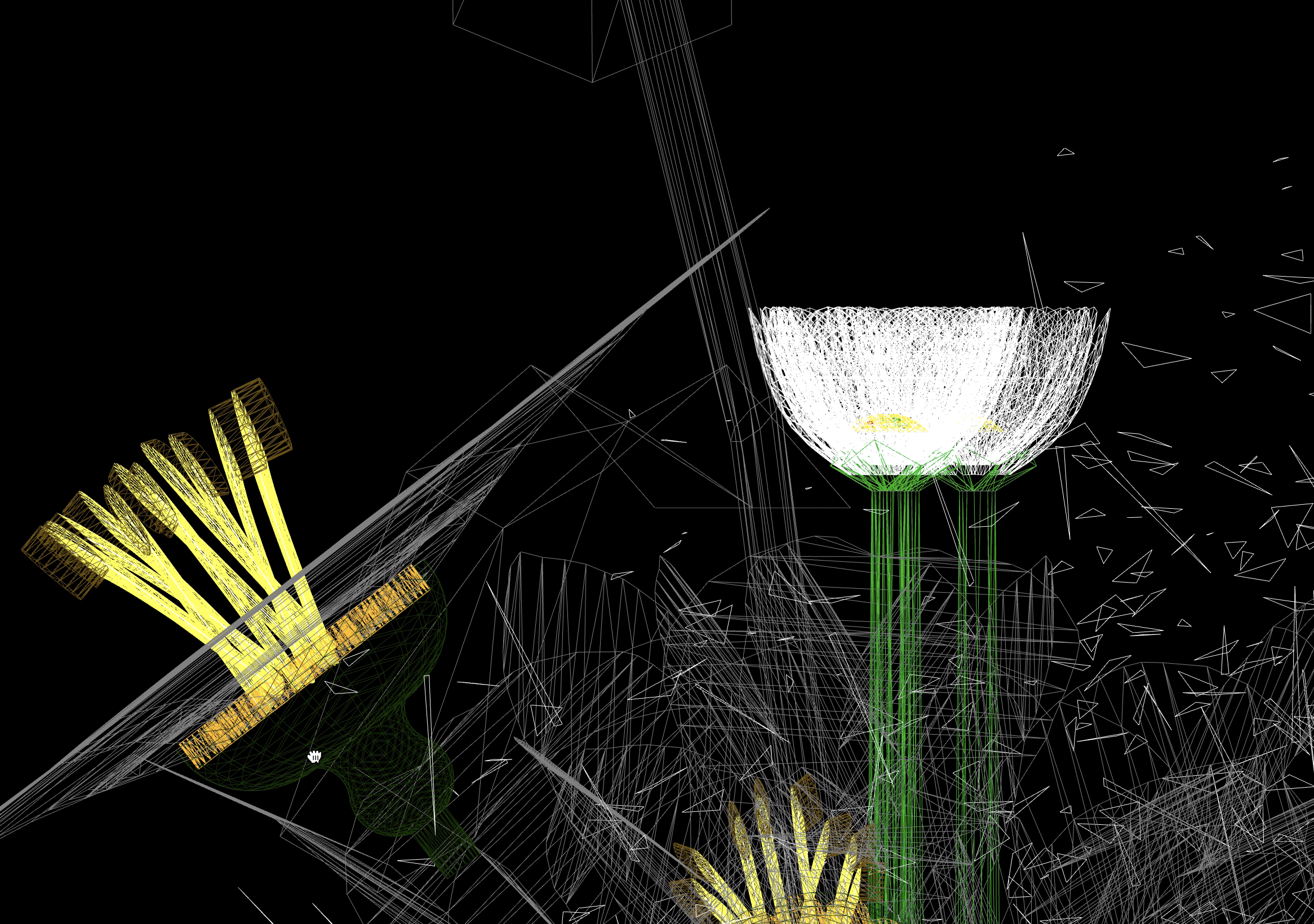
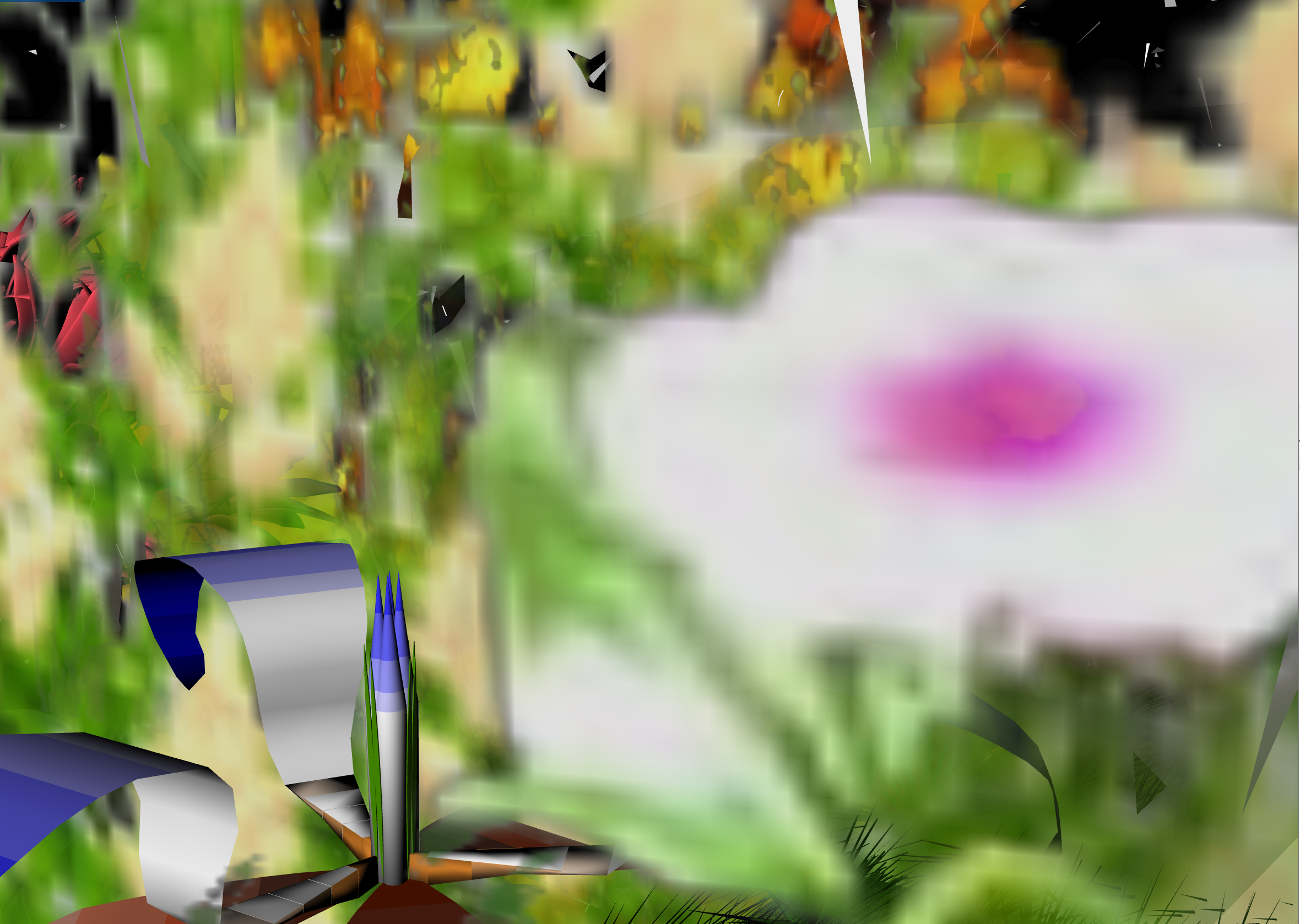
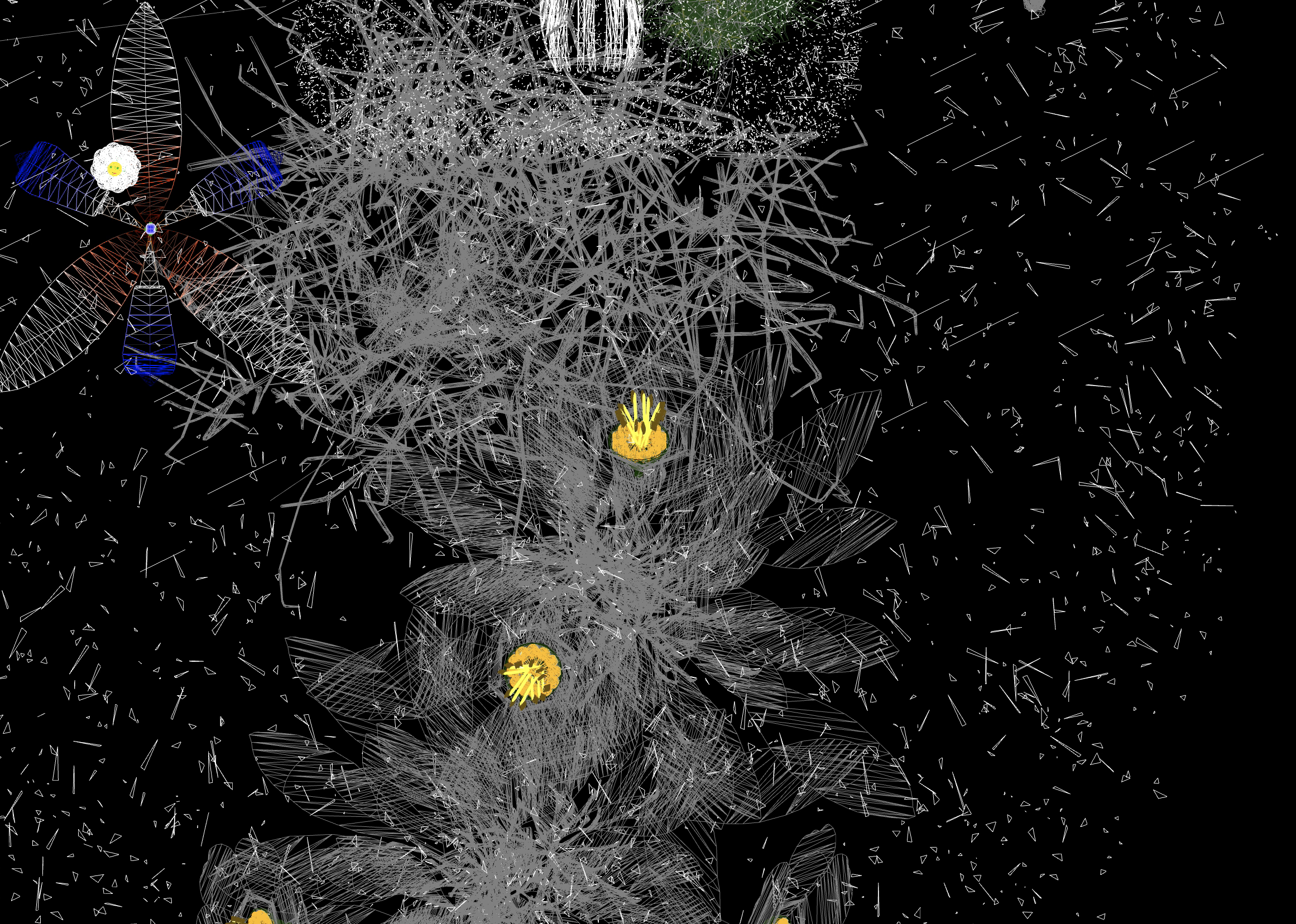
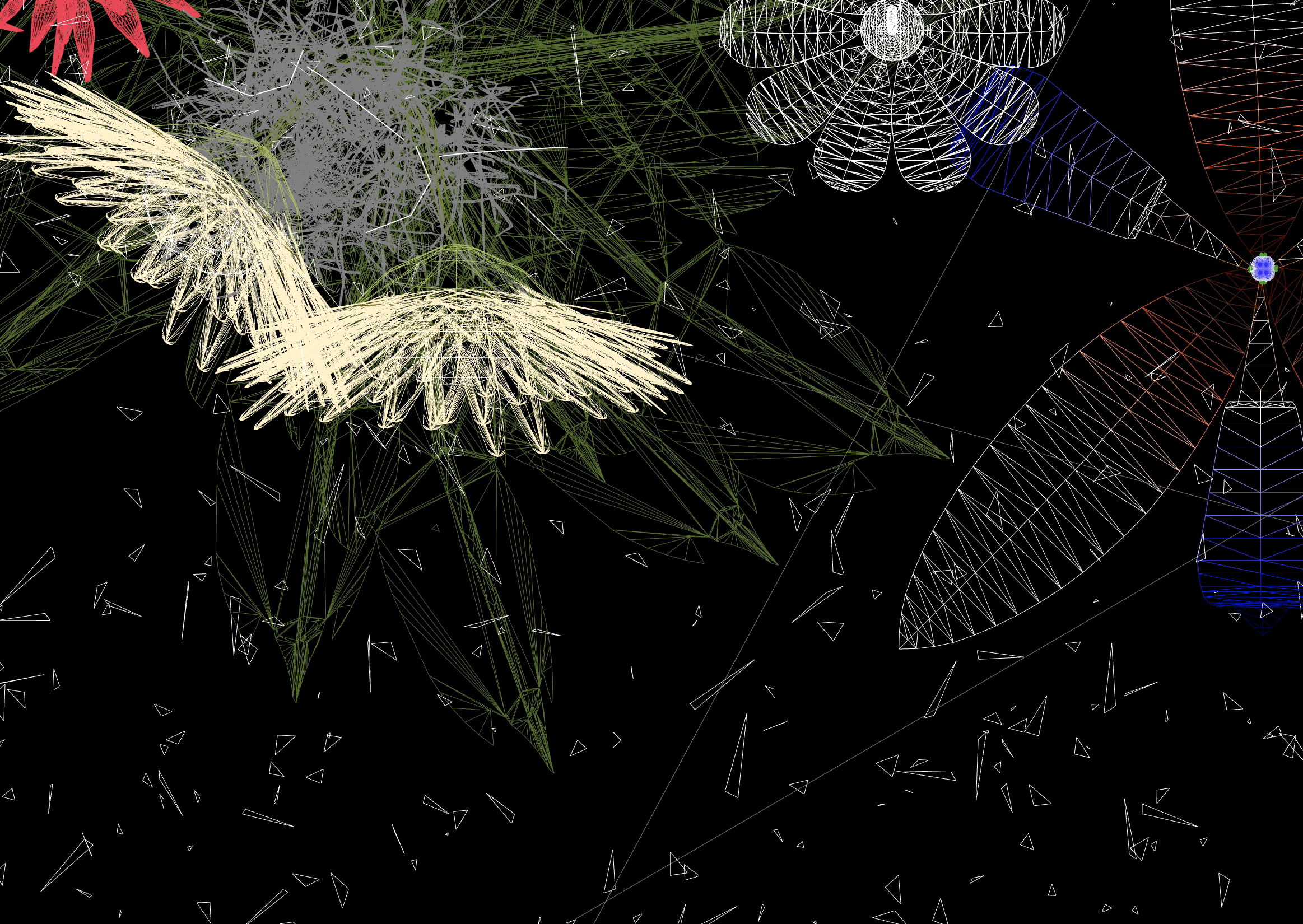
Debuting at the 59th International Art Exhibition, La Biennale di Venezia, The Art and Culture Development Foundation of the Republic of Uzbekistan (ACDF) will present Dixit Algorizmi — The Garden of Knowledge, curated and designed by the architectural and research studio Space Caviar (Joseph Grima, Camilo Oliveira, Sofia Pia Belenky, Francesco Lupia) and Sheida Ghomashchi. The Uzbekistan National Pavilion will present a reflection on the seminal work of Muhammad ibn Musa al-Khwārizmī, a scientist and polymath born and raised in the city of Khiva (present-day Uzbekistan). Al-Khwārizmī’s treatise On the Calculation with Hindu Numerals (825 CE) was responsible for the introduction of Hindu-Arabic numerals to Europe, and it was the Latin transliteration of al-Khwārizmī’s name to Algorizmi that gave us the modern word algorithm.
Dixit Algorizmi — The Garden of Knowledge sets out to question the origin myths and narratives surrounding modern technologies, using the lens of contemporary artistic practices to explore their forgotten roots and overlooked resonances with distant places, times, and cultures. The pavilion engages divergent interpretations of technology as a medium, acknowledging the depth and complexity of its history to be explored through an extensive public program.
“This is the second year we are participating at La Biennale di Venezia, and after a successful opening last year, we are coming back with new inspiring ideas and challenges to the world of contemporary art. We are proud that this year we can present our project through the legacy of the world-wide known figure of Muhammad ibn Musa al-Khwarizmi, whose House of Wisdom had served as a platform for crucial scientific discoveries, and became the core of all subsequent works in the world of contemporary science. We are grateful to our curators, who could reinterpret the values of the great scholar through the prism of art and approach the questions that are so relevant today.” – Saida Mirziyoyeva, Deputy Chairwoman of the Council of the Art and Culture Development Foundation of the Republic of Uzbekistan.“Al-Khwarizmi's work and heritage are a brilliant illustration of a complex and multilinear process that is a history of ideas. He is one of the most prominent scholars in the history of humankind, famous during his lifetime and legendary after his death, and yet we do not know much about him. We are very pleased that the theme chosen by the curator Cecilia Alemani correlates with the ideas and the current missions of the Foundation in the contemporary arts, as we aim to promote interdisciplinary approach in every aspect of our work. The exhibition will be accompanied by very deep academic and conceptual activities that will continue at the pavilion throughout the whole period of the Biennale. This year we invite great minds of the contemporary art world to join us in this artificial garden, the cultural hub inspired by the House of Wisdom of Al Khwarizmi and to be the part of our public program that will bring together important figures of the global contemporary art world and emerging artists and curators from Uzbekistan. The Uzbekistan Pavilion will host a series of panel talks, performances, and even an Uzbek traditional poetic duel. Our public program will provide a nurturing ground for Uzbek and global artists and curators, promote dialogue, and pave the way for future collaborations”. – Gayane Umerova, Executive Director of the Art and Culture Development Foundation of the Republic of Uzbekistan.
Curators
Space Caviar is an architecture and research studio operating at the intersection of design, technology, politics and the public realm. Founded in 2013, the office uses built work, exhibitions, publishing, writing and film to investigate and document contemporary modes of habitation and the spatialisation of social and political practice. Space Caviar’s work has been shown at the Venice Architecture Biennale, the Victoria and Albert Museum, Biennale Interieur, Vitra Design Museum and Nilufar Gallery, among others.
“Our intention is for the pavilion of the Republic of Uzbekistan to represent a departure from the classical paradigm of participation in the International Art Exhibition, according to which the pavilion is understood primarily as a container. Inspired by the environment within which al-Khwārizmī himself operated, we aim for the pavilion to become a space of the production of perception and the exchange of ideas — a ‘garden of knowledge,’ so to speak, in which heterogenous voices, from within and outside the field of artistic production, can converge and overlap. We conceive of this space as a place of meditation but also of composition, in which it is possible to question the greater order of things, and to consider the trajectory of the histories of art, science, technology, philosophy, and innovation from new perspectives. Throughout the course of the seven months of the Art Biennale, artists, scholars, historians, scientists, writers, and philosophers will be invited to address the possibility of alternative modernities, not so much attempting to replace the current image of modernity as to expand it in recognition of its deep origins — in distant, and unexpected, times and places.” – Joseph Grima, Space Caviar.
Soundscape
Charli Tapp is a visual artist and composer currently based in Japan. Active through intimate, obscure, and scattered in-situ performances, movies, and context-based installations, his work behaves as a wandering in cultural interpolation and transposition with a para-political attitude. Utilizing a diverse set of tools and techniques, it explores crevices, rather than utilizing a topic-based perspective, focusing on paradigm shifts, cracks, and disconnect in the fabric of each situation. Most recently, he held a show at MONO Lisboa (Portugal), and displayed his work at Anagra (Tokyo, Japan). Charli Tapp's works periodically crosses paths with Space Caviar through collaborations among which organizing an experimental composition residency reclaiming a local crater, producing generative sound design, and scoring for the movie Blockchain screened at the Vitra Museum & the Mudac (Switzerland), the MAAT (Portugal), and the MET (USA). Abror Zufarov is a virtuoso instrumentalist who has mastered his performance on the stringed-instruments tanbur, sato and dotâr in both the Tashkent-Fergana and Samarkand-Bukhara schools. He is a grandson of two outstanding and crucial figures in the history of Uzbek classical music: Turgun Alimatov and Usmon Zufarov. Through deep theoretical investigation, Abror Zufarov has taken an enormous interest into safeguarding, revitalizing, and transmitting this intricate cultural legacy to future generations. Throughout the last 20 years of his professional life, Abror Zufarov has been trying to reconstruct the authentic sound of the tanbur that was lost in the 1930s by reviving the metrical pattern of the instrument, thus bringing an old – new sound to Shashmaqom. In 2021 Abror Zufarov participated in the development of the sound for the first ever National Pavilion of Uzbekistan at the Architecture Biennale in Venice. He worked on the sound creation together with Carlos Casas, and was able to bring a new artistic layer to the pavilion.
Botanical Environment
Studio Mary Lennox is a creative studio specializing in Flower Styling, Botanical Design and Botanical Consultancy. Founded by Ruby Barber, Mary Lennox is named after the protagonist of Frances Hodgson Burnett's novel The Secret Garden, a story which celebrates the beauty, mystery and rejuvenating qualities of nature. By chance, Ruby's first studio also found itself on the corner of Mary and Lennox Streets in Sydney, Australia. The same building housed her father's first photography studio and her mother's first art gallery. Based in Berlin since 2012 and operating worldwide, Studio Mary Lennox works on a wide range of projects across different disciplines, with services that include botanical brand image consultancy, creative and artistic direction, concept creation and creative strategy, content development, scenography, set design and large-scale installation work.
Collaborations
CCA Lab is a research laboratory of the Center for Contemporary Art in Tashkent focused on developing contemporary art and cultural practices in Uzbekistan, as well as formulating new readings and visions of the region’s artistic heritage. The ultimate goal of the laboratory is to develop a series of exhibitions with the participation of international curators in Uzbekistan and abroad. CCCA Lab offers aspiring artists new experience and fosters interdisciplinary connections through a series of professional events. Center for Contemporary Art offers exhibitions, public programmes, and professional development events.
Team
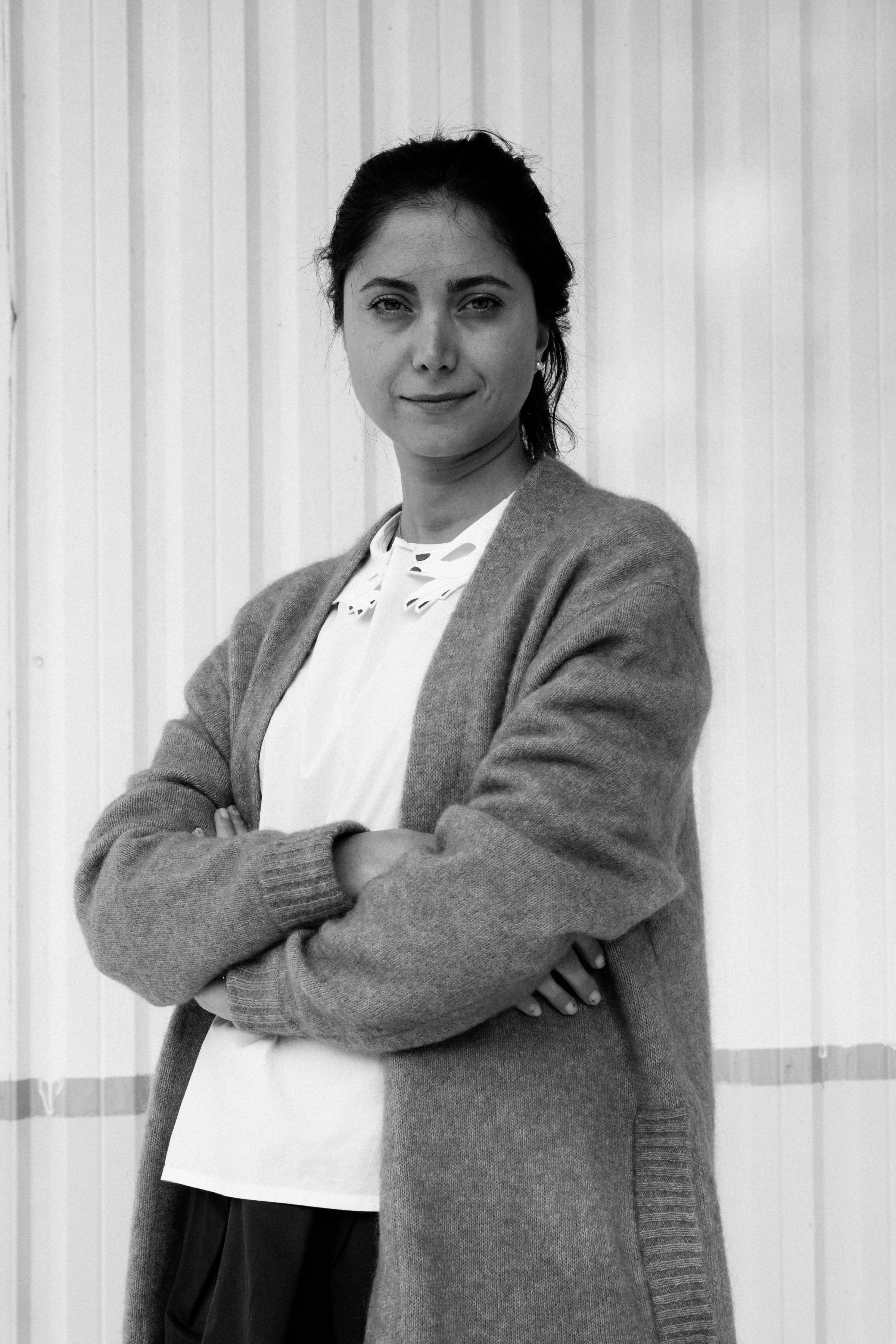
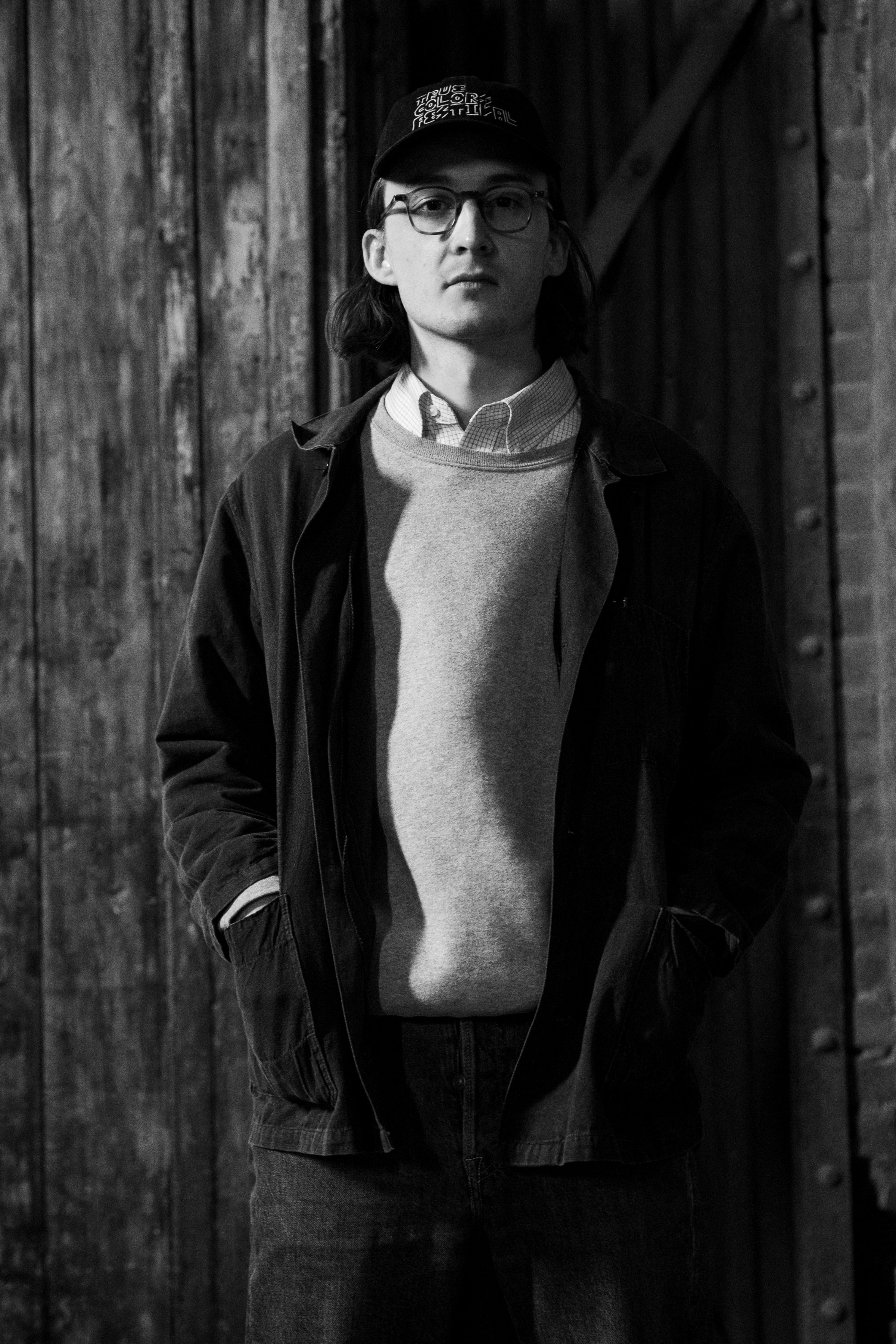
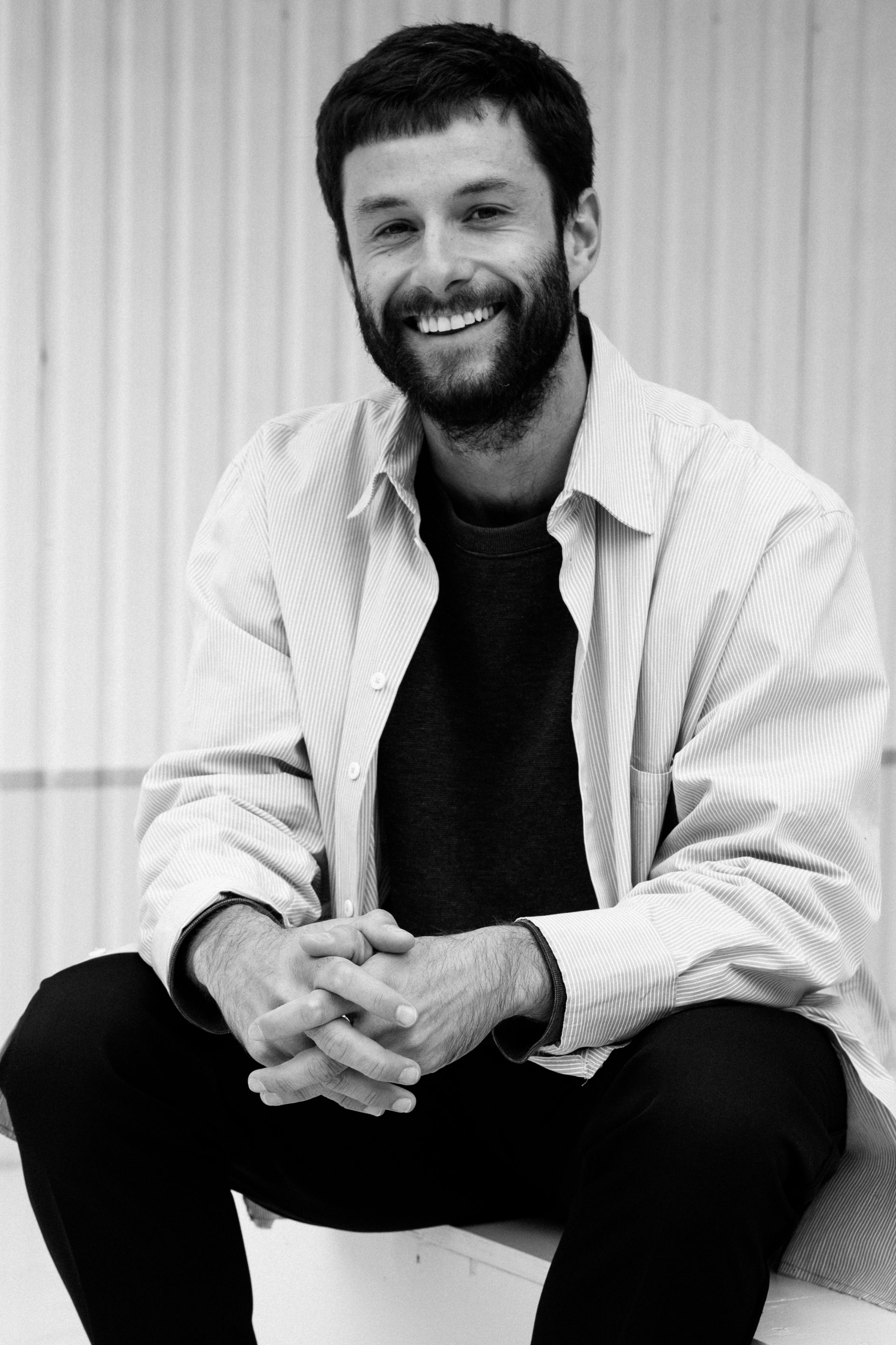
Joseph Grima
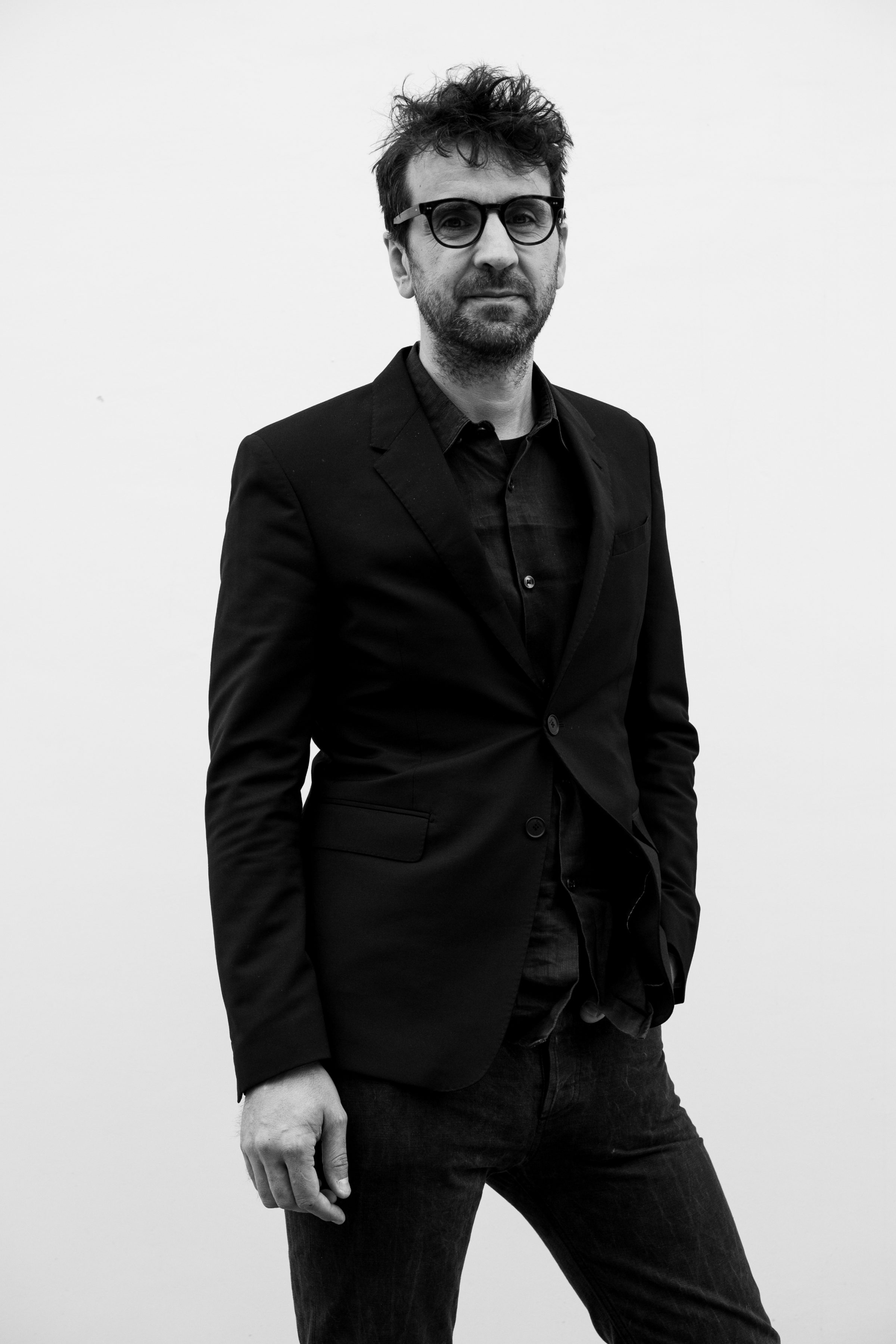
Joseph Grima is an architect and curator based in Milan, Italy. He is the Creative Director of Design Academy Eindhoven and Chief Curator of Design at Triennale di Milano and is also co-founder (together with Tamar Shafrir) of Space Caviar, an architecture and research practice operating at the intersection of design, technology, critical theory and the public space. Grima was previously the editor-in-chief of Domus magazine and director of Storefront for Art and Architecture, an independent gallery in New York City. In 2014 he was appointed co-curator of the first Chicago Architecture Biennial, and in 2012 he co-directed the first Istanbul Design Biennial. He was also the artistic director of Matera European Capital of Culture 2019.
Sheida Ghomashschi
Sheida Ghomashschi is an independent curator in Milan, Italy. She has been part of various projects such as a fellowship at Floating University (Forensic Architecture Group, Berlin, Germany), curating “Archive Alive!” at Exhibition of Ramak Fazel (Kandovan, Pejman Foundation, Tehran, Iran), editing for Tarikh Irani Magazine (Tehran, Iran), fellowship of “Ideas City - Detroit” at the New Museum of New York (USA), researcher in Urban Research program at BAUHAUS (Dessau, Germany). She has also participated as an artist in such residences as Dom Kreta (Warsaw, Poland), Group Affinity, Slavs and Tatars project, Kunstverein Munchen (Munich, Germany), Oikos Program (Lisbon, Portugal).
Special support
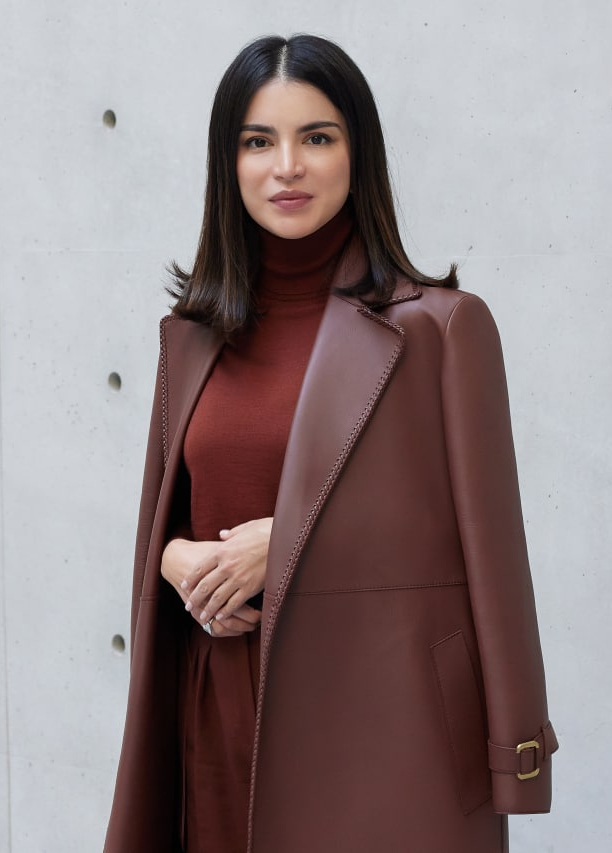
Saida Mirziyoyeva is Deputy Chairwoman of the Council of the Art and Culture Development Foundation of the Republic of Uzbekistan, Deputy Chairwoman of the Board of Trustees of the Public Foundation for Support and Development of National Mass Media of Uzbekistan. She holds a Bachelor's degree in International Law from the University of World Economy and Diplomacy of the Republic of Uzbekistan (2006). In 2008 she received a Master's degree in law from Tashkent State Law University, in 2010 and a Master's degree in Economics from Moscow State University. As a member of the Commission on Gender Equality, Saida Mirziyoyeva advocates for women empowerment in the country. As Deputy Chairwoman of the Board of the Art and Culture Development Foundation she actively supports projects aimed at promoting the cultural potential of the country on the world stage. Under her patronage, the first National Pavilion of Uzbekistan was opened at the Venice Architecture Biennale in 2021, In April 2020, she initiated the nationwide project “Safe Help,” which provided material support to socially vulnerable women during the COVID-19 pandemic. Also, under her supervision, the “Ko’ngil ko’zi” project extended their mission to support the educational, intellectual and spiritual development of visually impaired children.
Commissioner
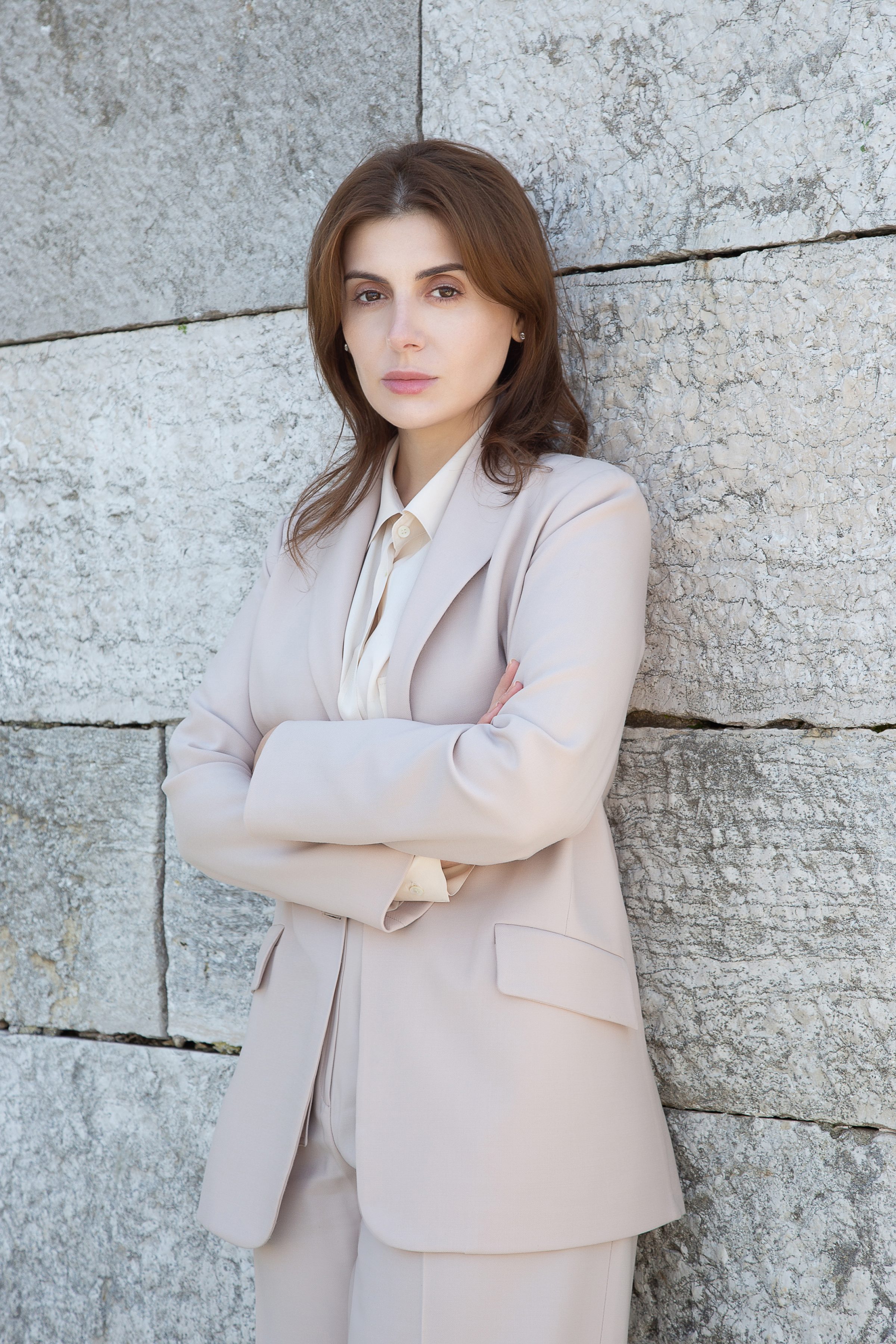
Gayane Umerova is Executive Director of the Art and Culture Development Foundation of the Republic of Uzbekistan and Secretary-General of the National Commission of the Republic of Uzbekistan for UNESCO. Gayane holds a BA in Business Administration from Westminster University and an MA in Art Business from Sotheby’s Institute of Art and Manchester University. Gayane started her professional career as a senior curator at the Art Gallery of Uzbekistan in 2008. In 2013 and 2014 she served as an advisor for a series of exhibitions “At the Crossroads: Contemporary Art from the Caucasus and Central Asia” at Sotheby’s London. In 2011 Gayane served as curator of the 6th Tashkent International Biennial of Contemporary Art (Uzbekistan), having coordinated educational programs for the 5th Tashkent Biennial in 2009 (Uzbekistan). In 2015 she curated the exhibition “Henry Moore: The Printmaker” at the State Art Museum of Uzbekistan. And in 2016 Gayane coordinated the “New Past” exhibition at the Art Gallery of Uzbekistan, which featured 19 artists including “Young British Artists” (Damien Hirst, Jake and Dinos Chapman, Gavin Turk and Sarah Lucas). She is the initiator of large-scale architectural projects in Uzbekistan: the reconstruction of the State Museum of Arts by Tadao Ando, the establishment of the Center for Contemporary Arts in Tashkent, the reconstruction of the State Children's Library, as well as the reconstruction of the residence of the Grand Duke Romanov. Gayane Umerova is a commissioner National pavilion of Uzbekistan at the 17th International Architecture Exhibition 20221 and 59th International Art Exhibition – La Biennale di Venezia. Also, under her leadership, in 2022, the first exhibition on the cultural heritage of Uzbekistan will be organized at the Louvre Museum and in 2023 exhibition of archaeological artifacts will take place at the James Simon Gallery in Berlin.
The Art and Culture Development Foundation of the Republic of Uzbekistan fosters international cooperation and promotes the culture of Uzbekistan on the international arena. The Foundation spreads the national heritage through developing and supporting initiatives in the areas of fine arts and architecture, literature, theater, music, and dance. Our mission is to create an inclusive and accessible environment in the country's cultural institutions, contribute to renovation of museums, and to develop cultural patronage and professional training for the arts and culture sector.
Credits
Institution: Art and Culture Development Foundation of the Republic of Uzbekistan Special support: Saida Mirziyoyeva, Deputy Chairwoman of the Council of the Art and Culture Development Foundation of the Republic of Uzbekistan
Commissioner: Gayane Umerova, Executive Director of Art and Culture Development Foundation of the Republic of Uzbekistan
Curators: Space Caviar (Joseph Grima, Sofia Pia Belenky, Camilo Oliveira, Francesco Lupia) Sheida Ghomashchi Exhibition design:Space Caviar (Joseph Grima, Sofia Pia Belenky, Camilo Oliveira, Francesco Lupia)
Visual identity and catalogue design:Studio Folder (Marco Ferrari, Elisa Pasqual, Molly Davies, Serena Gramaglia, Nunzio Mazzaferro)
Project management: Madina Badalova, Art and Culture Development Foundation of the Republic of Uzbekistan
Project assistants: Temur Ortiqov, Laziza Akbarova, Dilorom Tursunova, Jasur Asliev, Malika Zayniddinova
Art and Culture Development Foundation of the Republic of Uzbekistan
Exhibition installation: We Exhibit
Communication & PR: Casadorofungher Comunicazione, Flint culture
Soundscape: Charli Tapp, Abror Zufarov
Botanical environment: Studio Mary Lennox
Catalog authors and contributors: Eddie Blake, Vera van der Burg, Amanulla Buriev, Christopher Burman, Alessandro Celli, Maya Christodoulaki, Fabiano Cocozza, Camilla Colombo, Amandine David, Shady Elbassuoni, Ali Ghomashchi, Michael Kessler, Ibrahim Kombarji, Maxwell Neely-Cohen, Outpost Office (Ashley Bigham, Erik Herrmann), Dámaso Randulfe, Sara Raza, Ayesha Saldanha, Roo Shamim, Noam Youngrak Son, Ilaria Speri
Editing: Maxime Benvenuto
Translations and editing in Russian: Denis Stolyarov
Translations and editing in Uzbek: Nigora Umarova
Press office:
ACDF : Nigora Tursunova, n.tursunova@acdf.uz
Flint culture : Josh Dobbins, josh.dobbins@flint-culture.com
Casadorfungher Comunicazione : info@casadorofungher.com
Piera Cristiani: info@pieracristiani.com